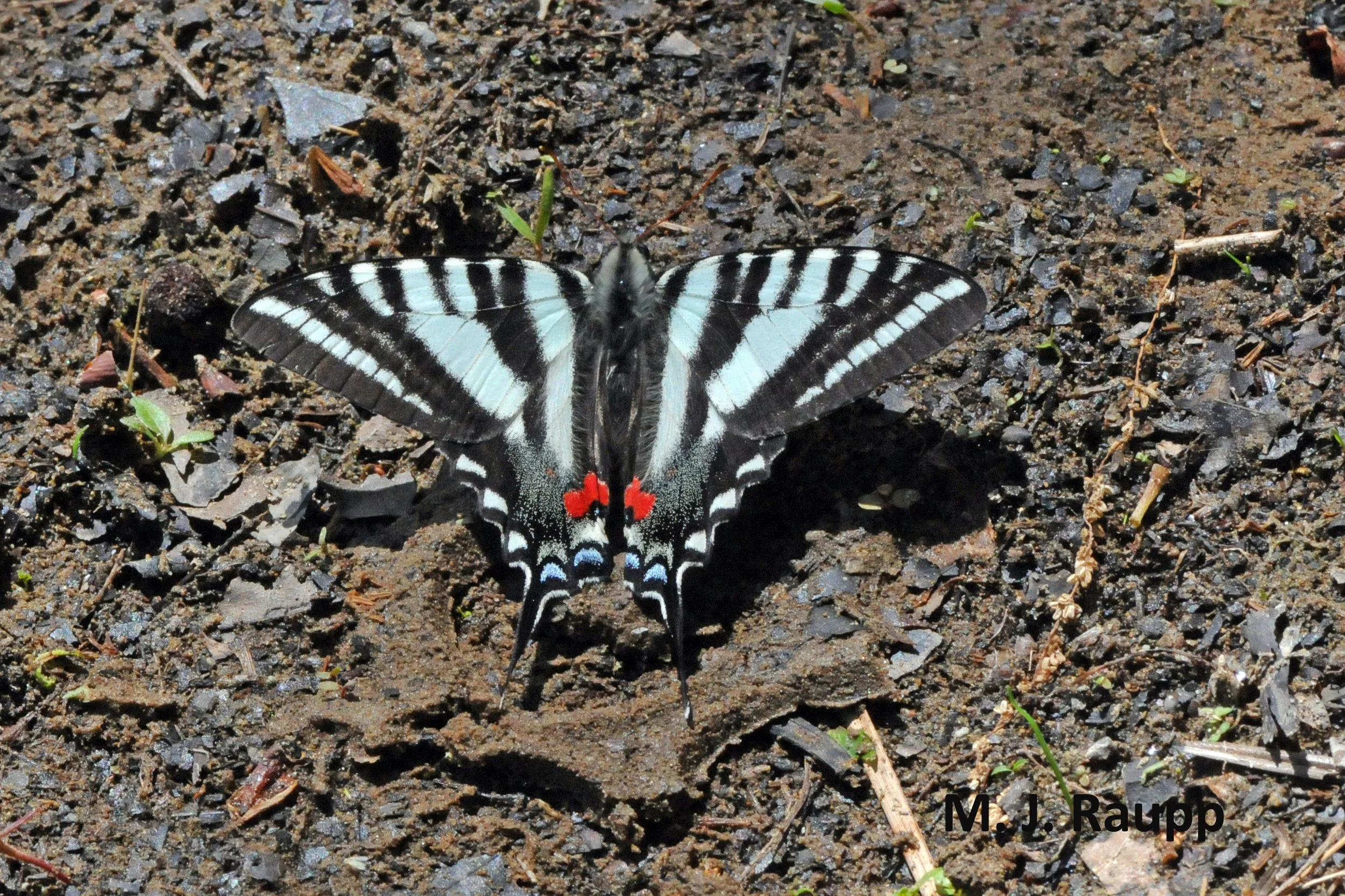
In last week’s episode, we met fierce six-spotted green tiger beetles roaming the trail along the C & O canal in western Maryland. While catching glimpses of these predators, a steady stream of gorgeous zebra swallowtails cruised the bike trail and muddy riverbank. The parade of zebras along the Potomac and other rivers in the DMV is linked to the presence of pawpaws lining these tributaries. Like so many members of the butterfly clan, zebras depend on a rather limited menu of plants that serve as food for their progeny. Zebra butterflies specialize on members of the genus Asimina, the pawpaws.
On a warm, early spring day along the banks of the mighty Potomac River, zebra swallowtails “mudpuddle” to obtain sodium and other minerals necessary for life. Watch as the zebra probes the soil with her proboscis. Later on as spring turns to summer, eggs laid by the female zebra hatch and caterpillars feed on pawpaw leaves. Caterpillars of the zebra swallowtail are elusive. After searching hundreds of pawpaws, I finally discovered an almost fully developed larva taking a stroll along a pawpaw branch. Lucky me.
Along the banks of the Potomac and other tributaries of the Chesapeake grow small forests of beautiful native pawpaw trees. A walk amongst these winsome understory trees sets one to wondering why their luxuriant green leaves often go virtually unmolested by leaf-eating insects and vertebrates during the growing season. Even rapacious white-tailed deer shun these plants. Pawpaw has evolved a clever defense, a noxious group of chemicals called annonaceous acetogenins. These bioactive compounds, found in both leaves and bark, likely make them unpalatable to a diverse array of hungry herbivores.
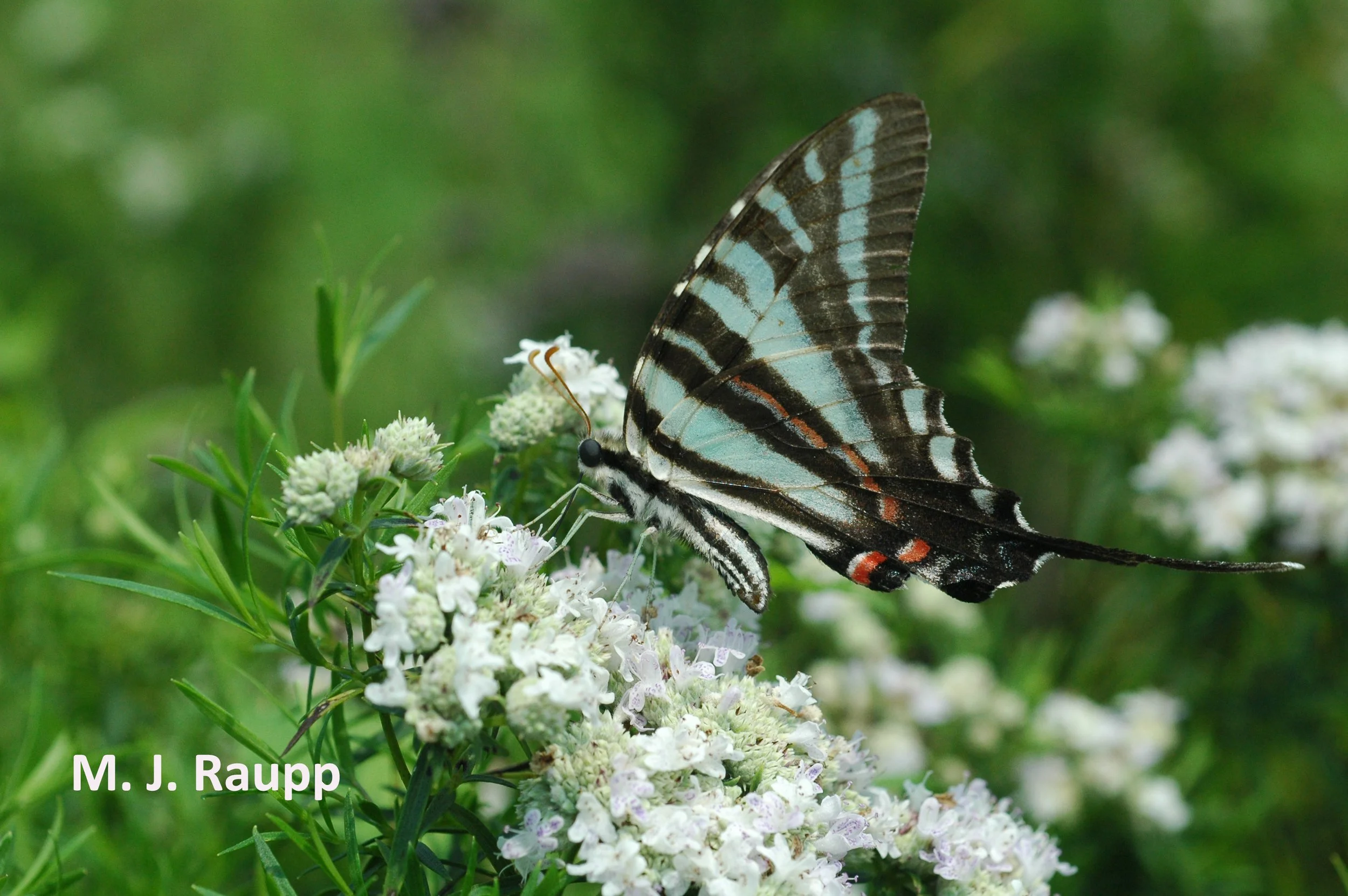
Zebra swallowtails consume carbohydrate rich nectar to power their search for pawpaws, the food for their young.
In addition to nasty metabolic effects, acetogenins are known to produce a potent emetic response in vertebrates. Ah, but herbivorous insects often discover ways to deal with defenses thrown at them by plants. In previous episodes we learned how monarch caterpillars turned the tables on milkweeds and used defensive compounds produced by milkweeds for their own defense against predators. A similar story holds for the zebra swallowtail butterfly. Sophisticated chemical analysis revealed that zebra swallowtail caterpillars and adult butterflies contained annonaceous acetogenins similar to those found in pawpaws. Scientists believe that these compounds originate in the leaves of pawpaw, are stored in the tissues of caterpillars as they eat leaves, and are passed along to the adult butterfly. The presence of acetogenins likely helps protect both the beautiful butterflies and their larvae from the beaks and teeth of hungry predators.
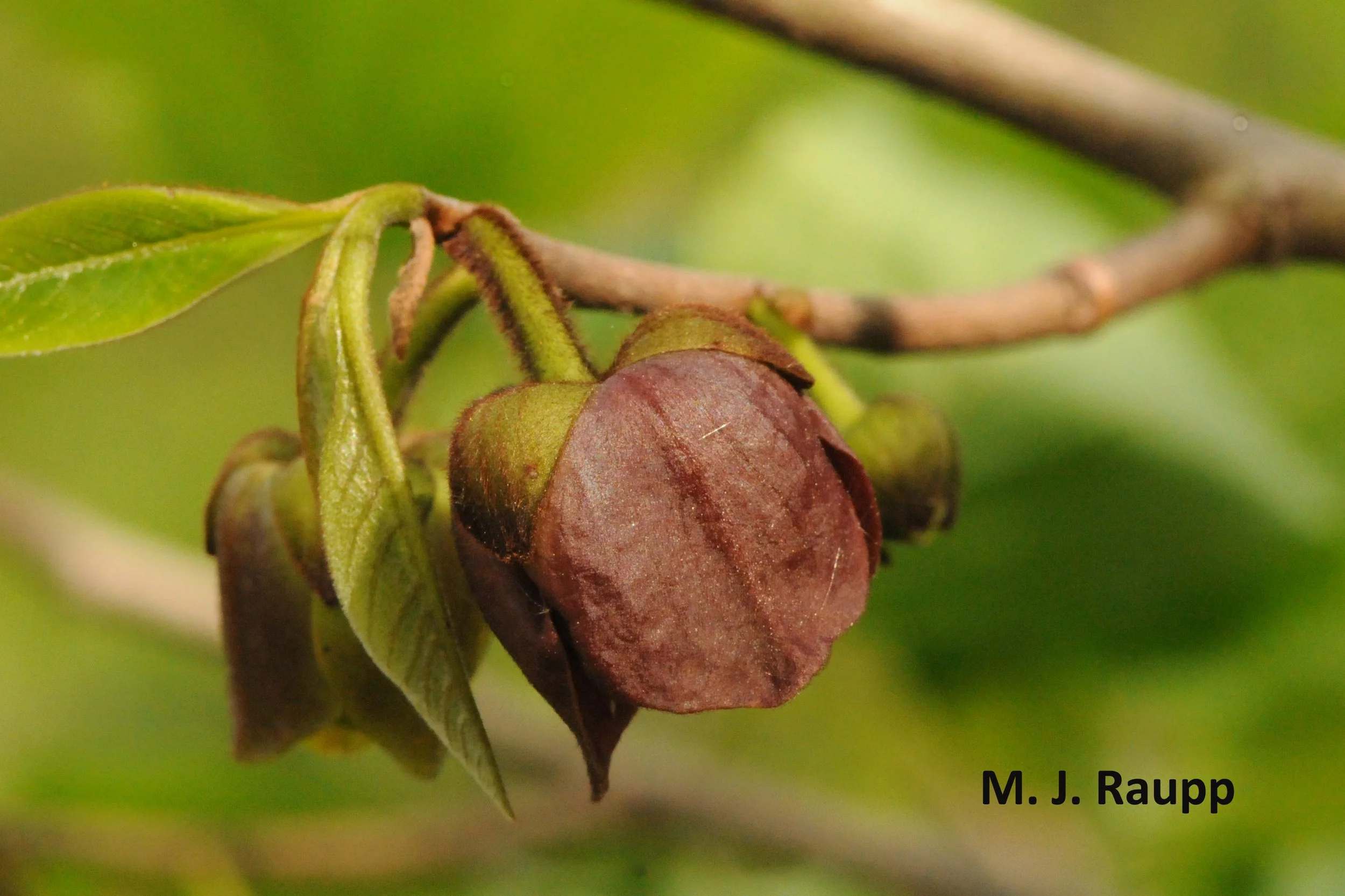
With a faint fragrance akin to carrion the beautiful blossoms of pawpaw are pollinated by flies and beetles rather than bees.
During the next month or so, find a moment for a walk along the Potomac or other nearby rivers where pawpaws abound. Be sure to keep an eye open for zebra swallowtails and spend a few moments searching pawpaw leaves for magnificent zebra caterpillars. And in autumn, don’t miss the chance to savor the delicious fruits of the pawpaw tree.
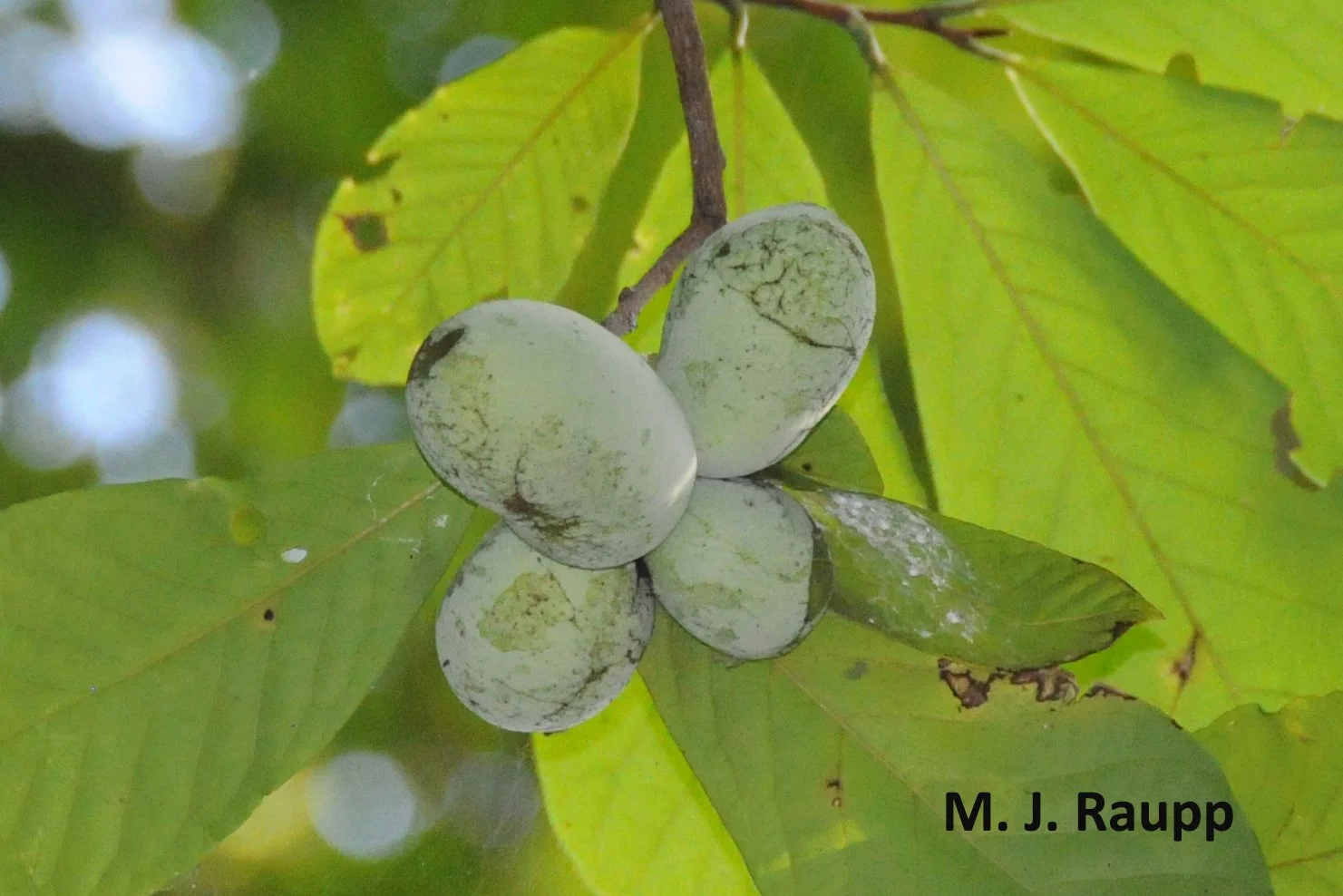
Along the Potomac and Patuxent Rivers in the DMV, delicious pawpaws appear in late summer. Pawpaw is one of the largest edible fruits produced by any native North American tree.
Acknowledgements
Bug of the Week thanks Pete Seeger whose rendition of “Way down yonder in the pawpaw patch” inspired this episode. The great read, “Chemical Defense in the Zebra Swallowtail Butterfly, Eurytides marcellus, Involving Annonaceous Acetogenins” by John M. Martin, Stephen R. Madigosky, Zhe-ming Gu, Dawei Zhou, Jinn Wu, and Jerry L. McLaughlin was consulted in preparation for this episode.