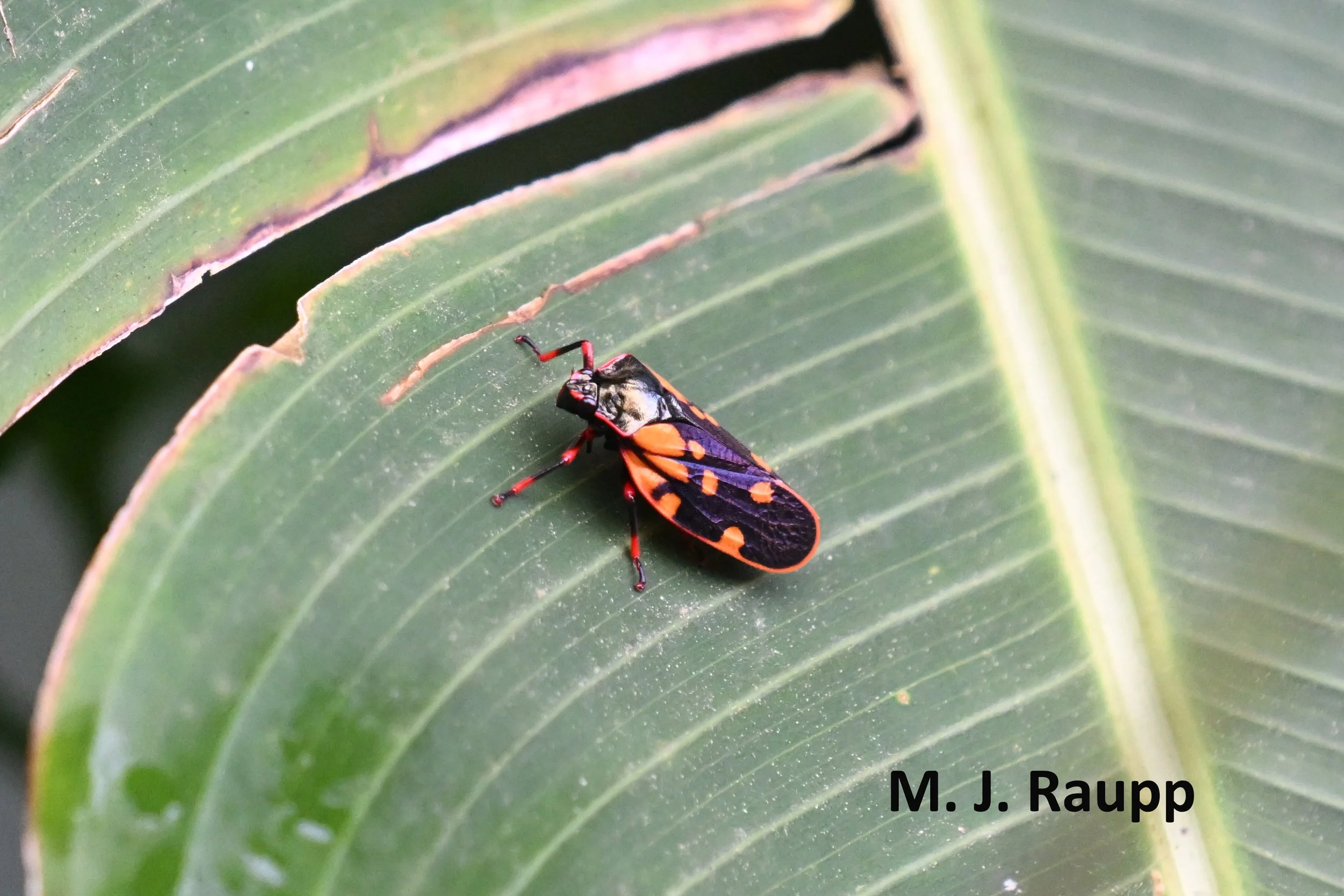
As the holiday season draws to an end and the chilly grip of old man winter settles into the DMV, it’s time for Bug of the Week to head to warmer realms to visit insects and their kin in tropical places. Over the next several weeks, we will meet relatives of our native Maryland insects that enjoy warm weather somewhere else on planet earth. Our first stop will be the cloud forests of Costa Rica. Here we will meet some of the fascinating insects that make their home on the beautiful Heliconia plants found throughout tropical regions. Our first delight is the Golden Froghopper.
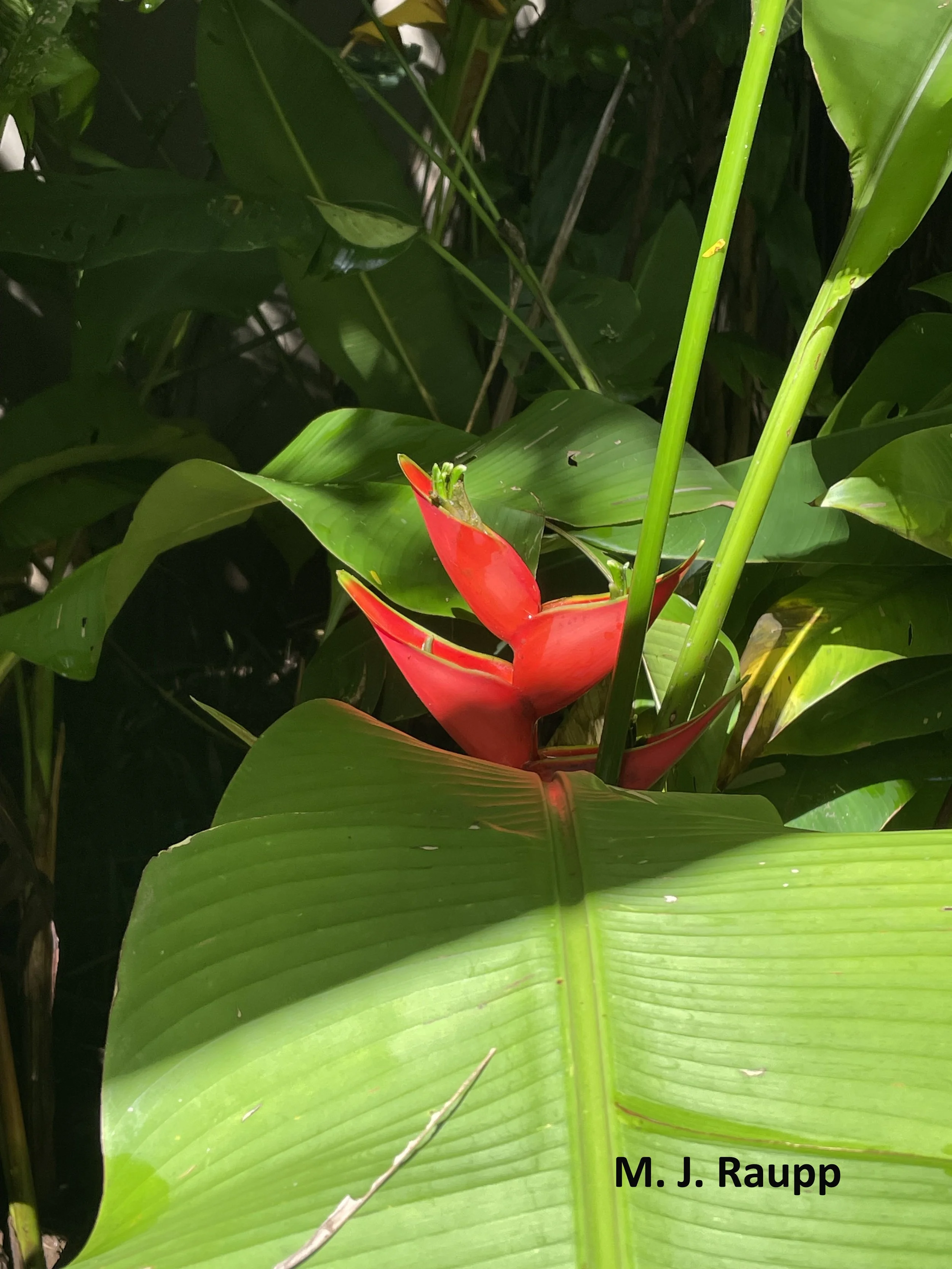
Beautiful Heliconia plants are home to many insects, including the Golden Froghopper.
Froghoppers are a large family of insects technically known as Cercopidae.
Beautiful Heliconia plants are home to many insects in the tropical rainforests of Costa Rica. Gorgeous Golden Froghoppers can frequently be seen strolling across Heliconia leaves and dining on their nutritious sap. Excess fluid discharged from their rear-end is called honeydew, and it rains down on plants and slow-moving people below. Maybe this is yet another reason it rains in the rainforest.
Immature stages of froghoppers produce a bubbly concoction called spittle. Unsurprisingly, they are called spittlebugs. Spittle is a fairly innocuous mix of excess plant fluid voided by froghopper nymphs. Proteinaceous glandular secretions and air bubbles introduced by clever contortions cover the body of the nymph. The spittle serves to keep the developing nymph moist and insulated from extreme temperatures. It also may serve as a deterrent from attack by stinging parasitoids and hungry predators. Would self-respecting birds really wade through a glob of spittle in search of a buggy meal? I think not.
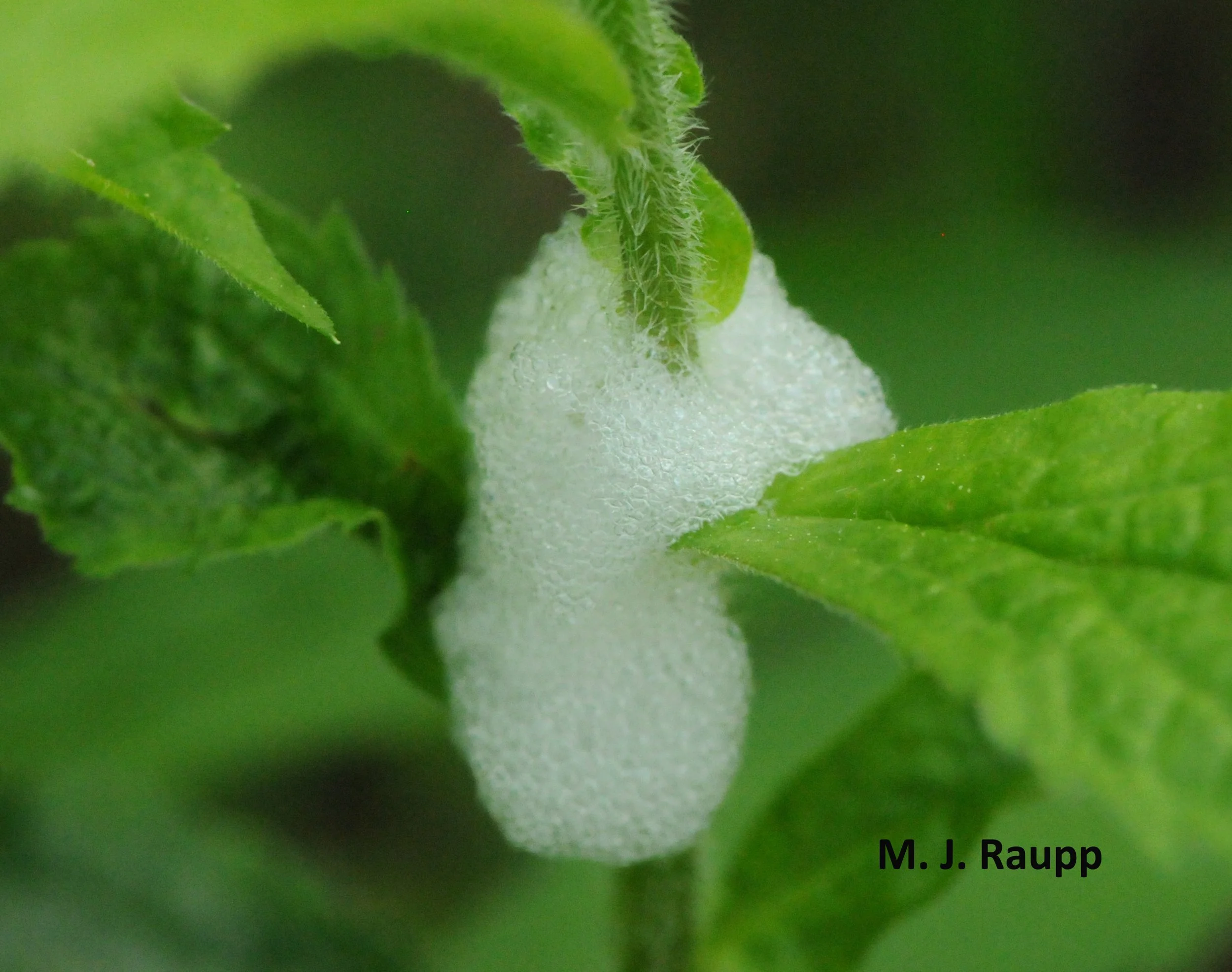
What’s this? It looks like spittle.
After molting several times within their bubble home, nymphs turn into winged adults. Adults suck plant sap to obtain nutrients and excrete excess sap in the form of honeydew, as do other sap-suckers including aphids, scale insects, and lanternflies.
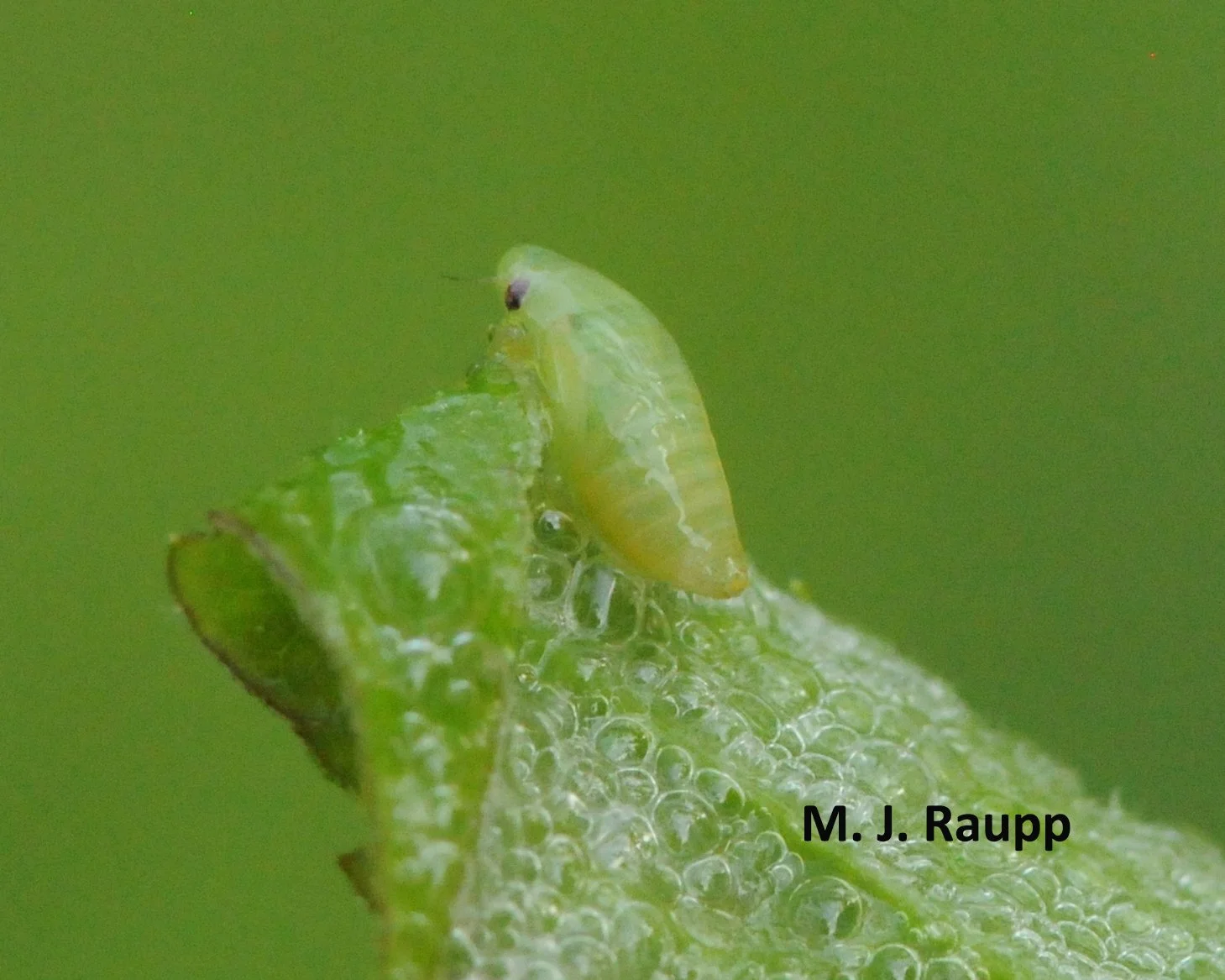
A cute spittlebug nymph wonders what happened to its bubbles.
Many adult froghoppers like those found in the DMV sport rather drab colors of gray or brown or cryptic shades of green and are not often seen during casual excursions to the garden. However, in the tropical rainforests of Costa Rica froghoppers can be stunning, like the gorgeous Golden Froghopper. Most spittlebugs and froghoppers cause no economic damage. While you may not have a chance to visit beautiful froghoppers in the tropics, next spring when you walk in the meadow, fear not the spittle and take a moment to brush back the bubbles and enjoy these curious sap-suckers.
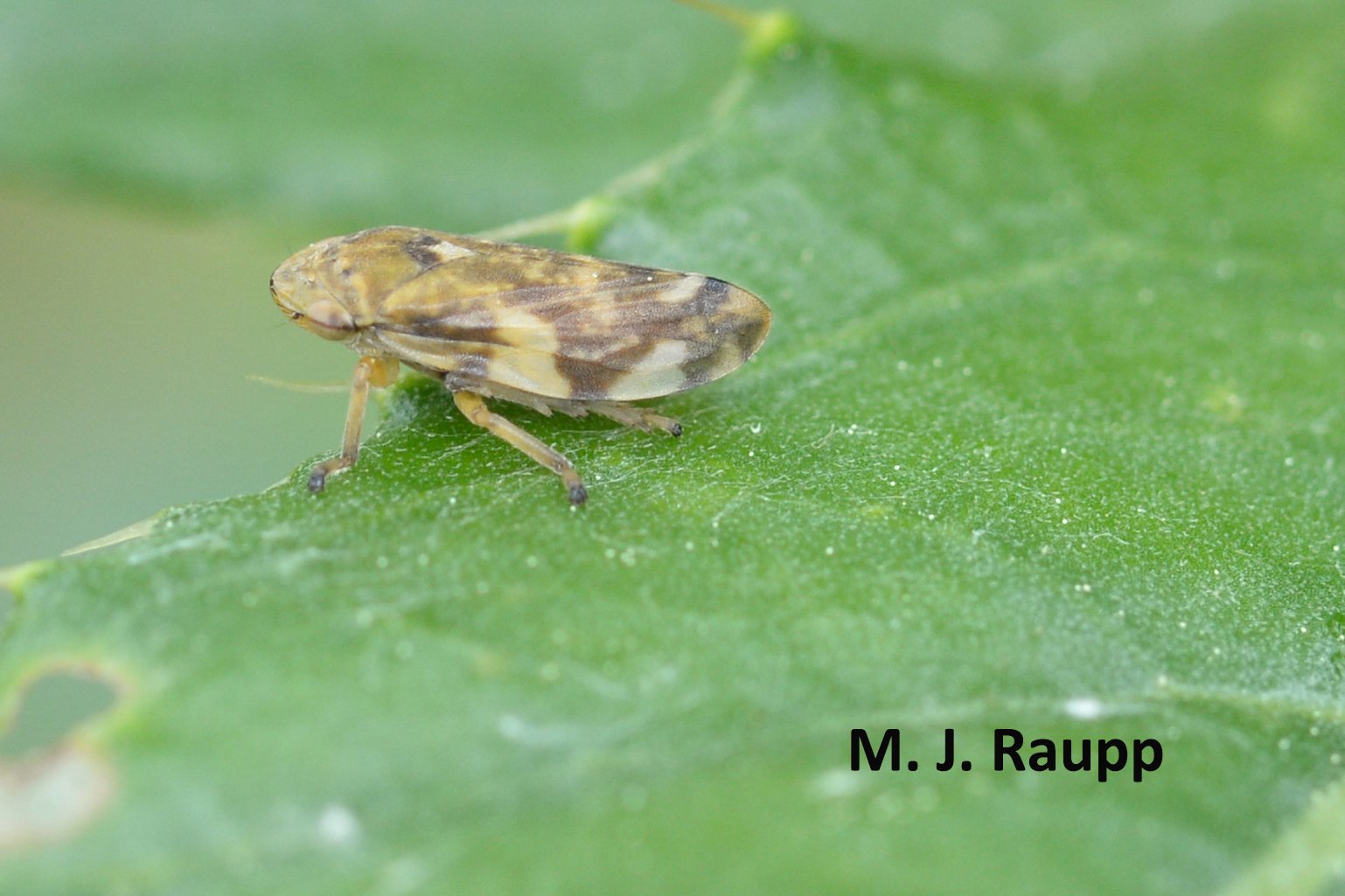
Our native froghoppers like this one are often relatively drab.