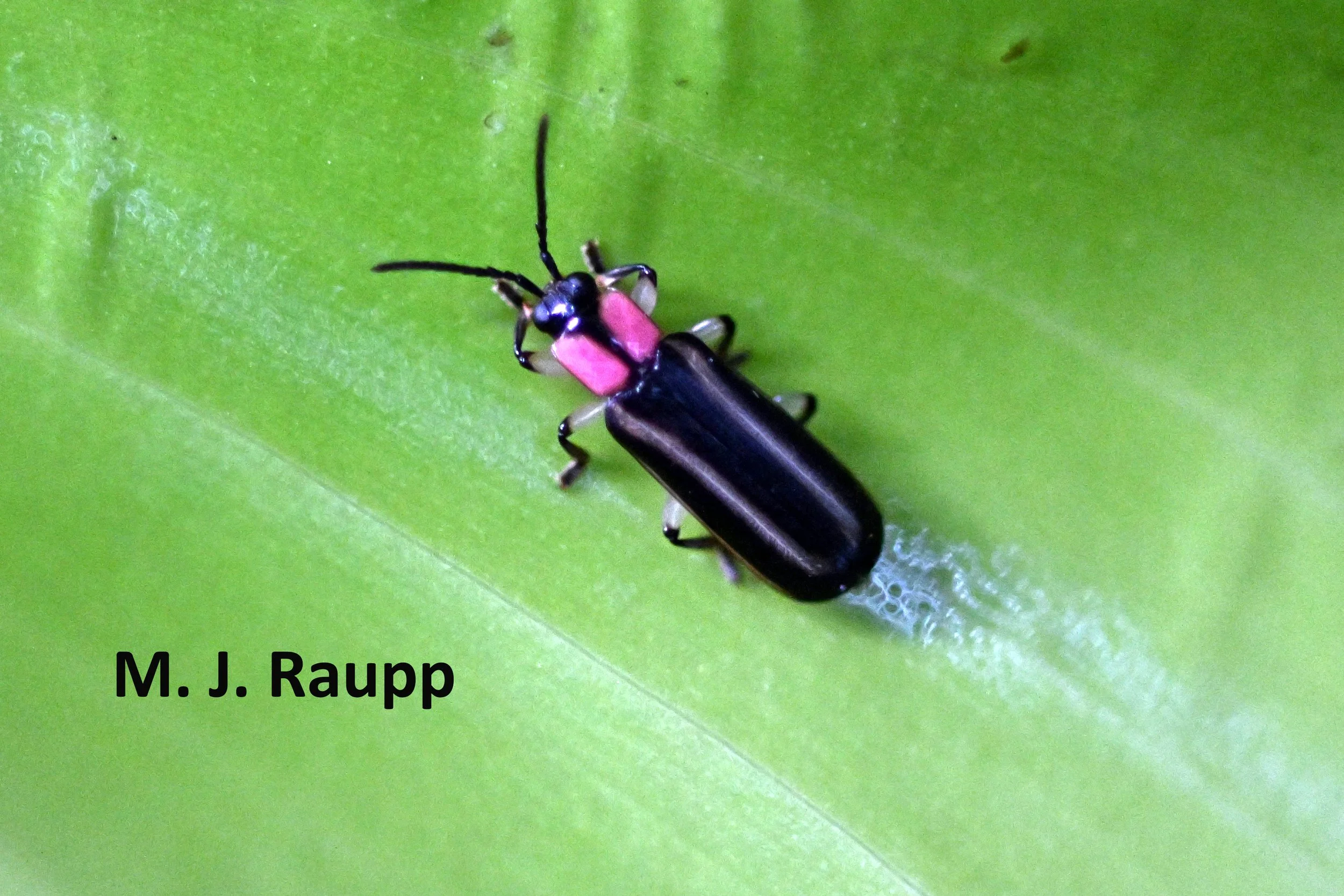
Last week we visited beautiful Heliconia plants where we met some very pretty Golden Froghoppers as they sipped sap from leaves of Heliconia. This week we return to the lovely Heliconia plant to explore strange patterns of herbivore feeding on their leaves. These marks were created by some unseen herbivores that scraped away leaf tissue from the surface of the tender green leaves. These interesting patterns included small linear rows of missing tissue and larger isolated jelly-bean shaped translucent scars on the leaves. These marks were the handiwork of a curious group of leaf beetles, Chrysomelidae, known as rolled-leaf hispine beetles.
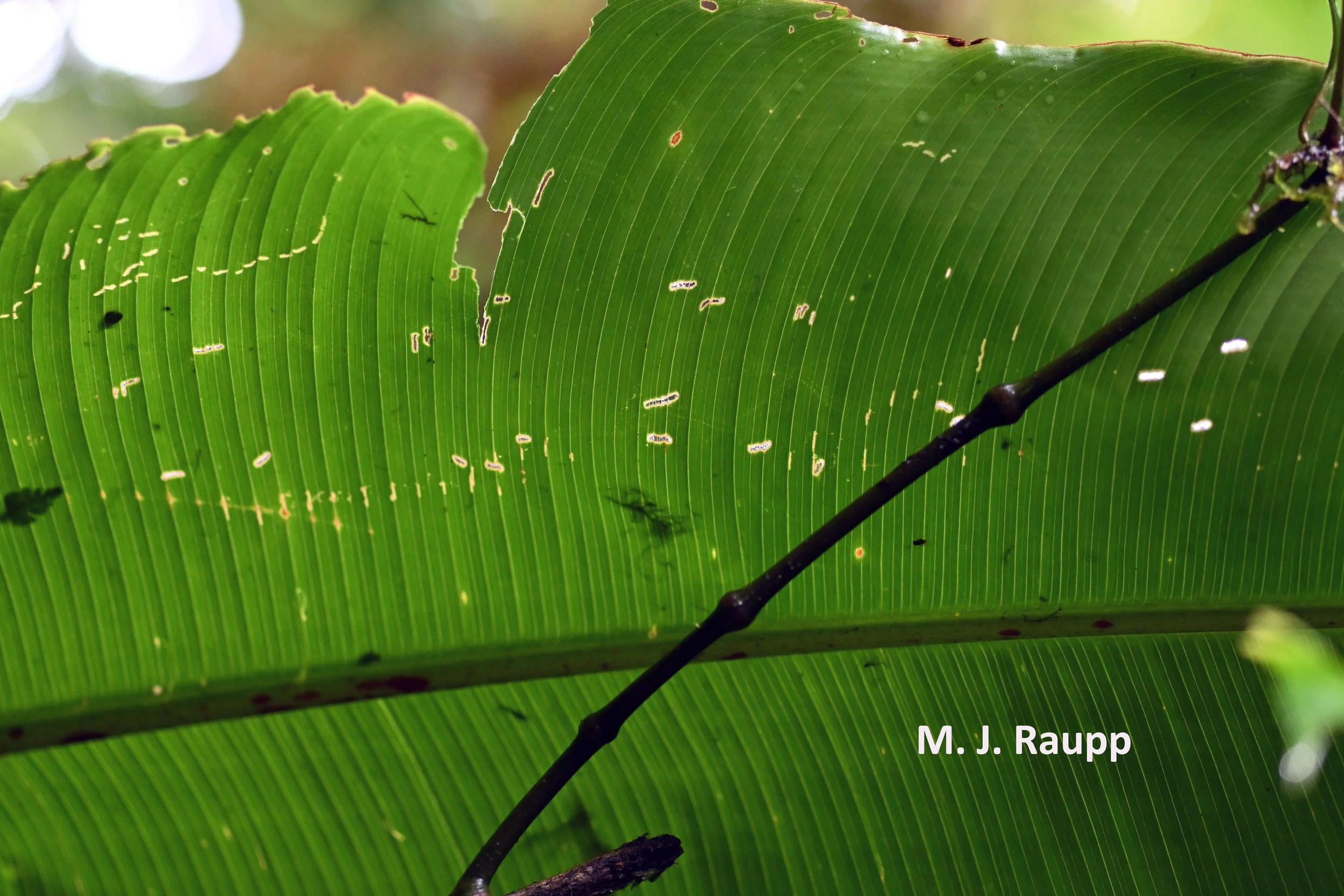
What caused these unusual holes and marks on the Heliconia leaf?
In tropical regions of the Americas more than 180 species of rolled-leaf hispine beetles have been described. In addition to Heliconia plants, several other members of the ginger family serve as hosts for rolled-leaf hispines. While the star of this week’s episode feeds on the unfurled leaves of Heliconia, other members of the clan eat tissues of flower bracts and leaf petioles. For Cephaloleia spp. we visit this week, life begins in a tubular leaf-scroll where female beetles deposit eggs between the rolled layers of an unfurled Heliconia leaf. These eggs hatch into extraordinarily flattened larvae with a perfect body shape for life between the appressed layers of a rolled leaf. Their mandibles scrape soft, nutritious tissue from between the veins of Heliconia leaves. Their feeding behavior, termed “strip-mining”, is responsible for the linear feeding patterns seen on unfurled leaves.
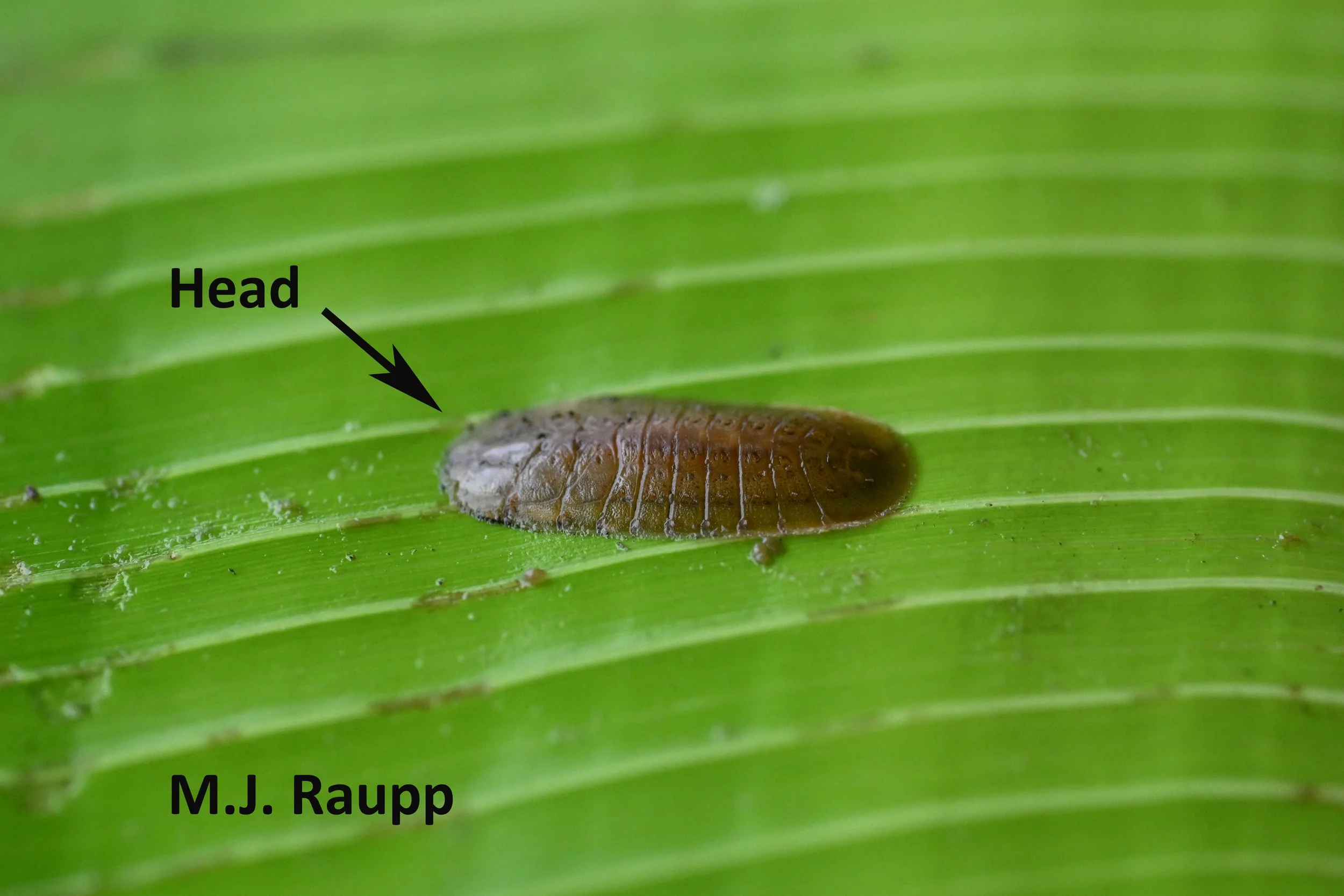
For strange rolled-leaf hispine larvae it is difficult to tell the head from the tail.
Beetle larvae glide across the surface of the leaf on unseen legs beneath their body. Larval locomotion is strangely reminiscent of the movement of a slug or snail. Larvae of Cephaloleia pupate in a nook or cranny of the Heliconia plant before emerging as adults that return to the safety of a rolled leaf to feed. Adults create larger feeding marks on the leaf surface, as do fully developed larvae.
This week we return to the beautiful Heliconia plant to unravel the mystery of some strange feeding marks on its leaves. With no one home on the surface of an expanded leaf, unfurling a rolled-up leaf revealed a hungry rolled-leaf hispine leaf beetle and its feeding wounds on the leaf margin. On the inside of a more mature leaf-roll, a young beetle larvae glides over its older cousin on six tiny legs hidden beneath its body. Partially unrolling the scroll-like Heliconia leaf sent this leaf beetle scampering for the cover of a furled section of the leaf. Mystery of strange feeding marks on Heliconia solved.
In Costa Rica, some species of Heliconia are home and tucker to several species of rolled-leaf hispine beetles. In addition, the number of hispine beetle species increases with the geographic range of their ginger-family host plants, physical size of the plant species on which they feed, and abundance of plant hosts in an area. For Costa Rican Cephaloleia, life is on a roll in a roll.
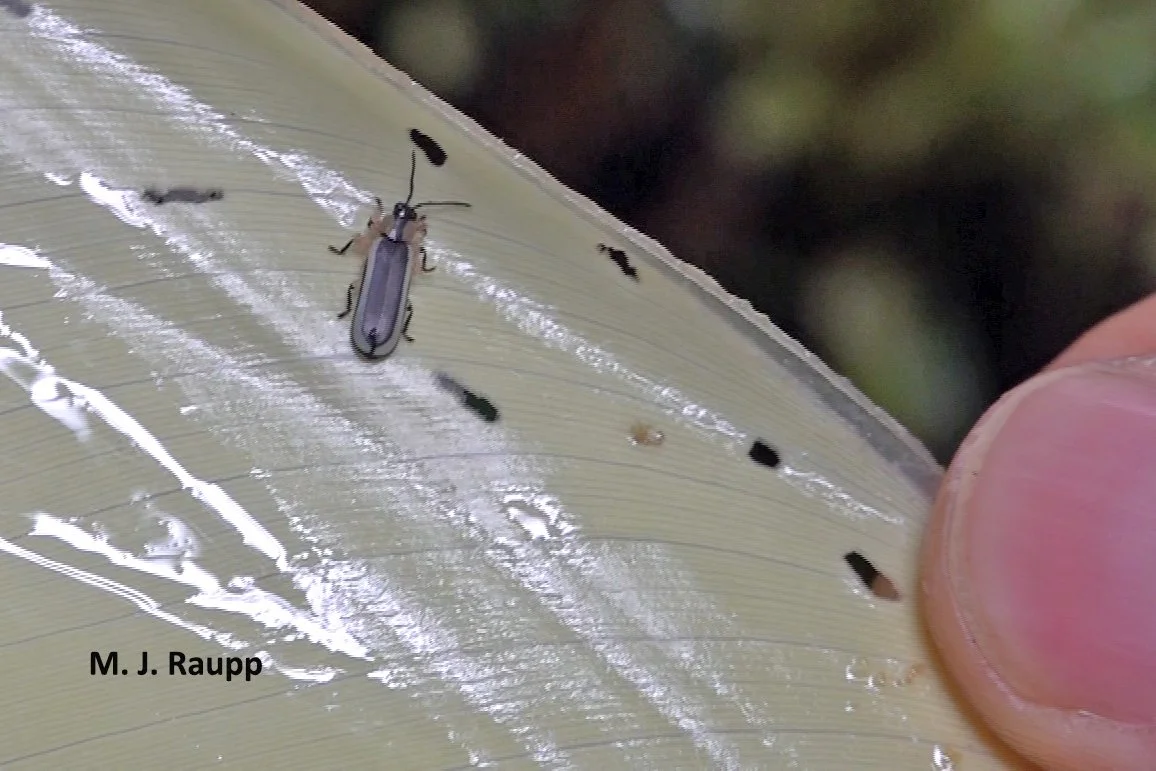
Different species of rolled-leaf hispine beetles have unique feeding sites leaving distinct feeding marks on plants.
Acknowledgements
The wonderful articles “Rolled-Leaf Hispine Beetles (Chrysomelidae) and their Zingiberales Host Plants in Middle America” by Donald R. Strong, Jr. and “Notes on the ecology of rolled-leaf hispines (Chrysomelidae, Cassidinae) at La Gamba (Costa Rica)” by Michael Schmitt and Meike Frank served as references for this episode.