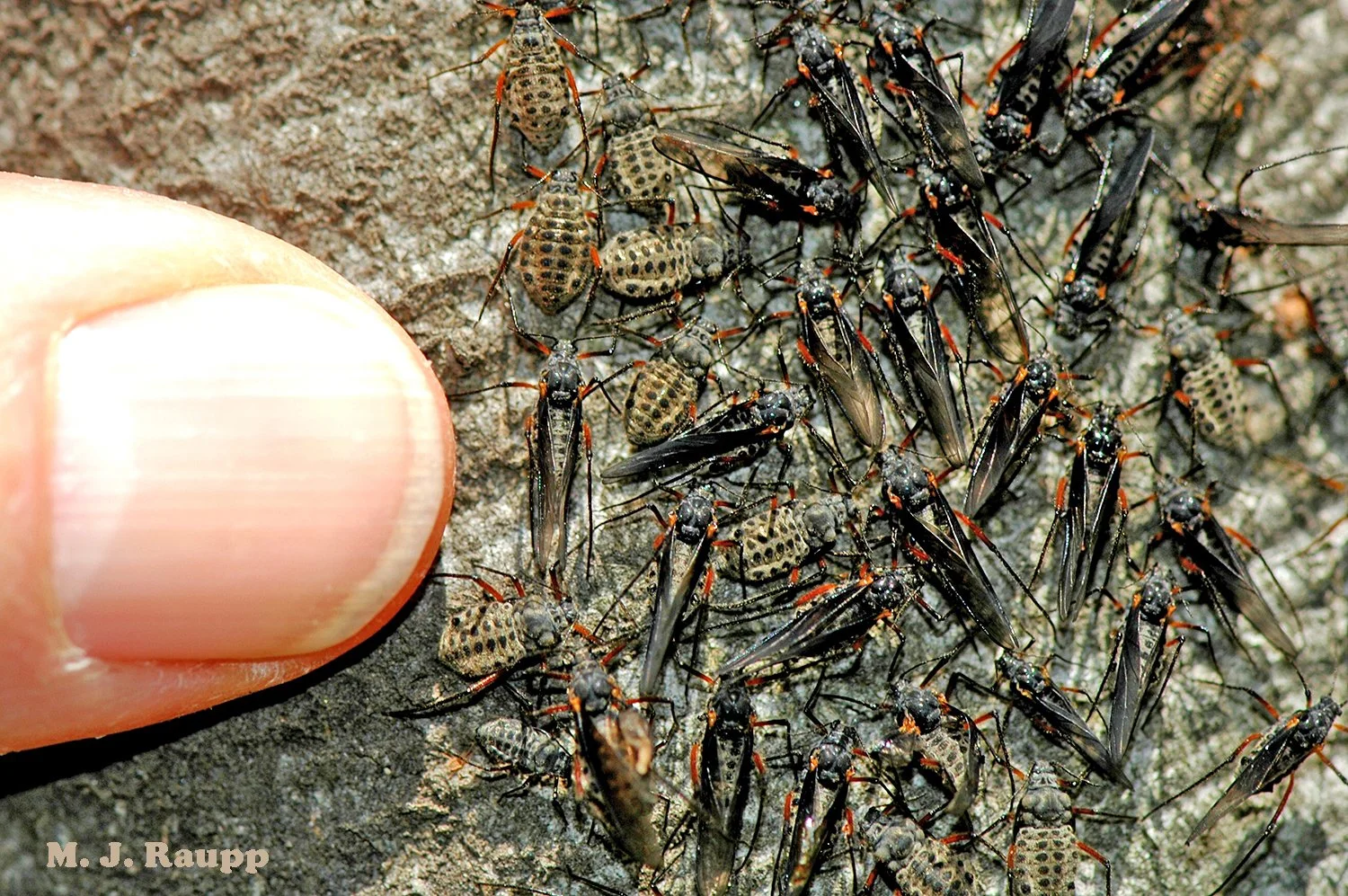
This week we dive into the Bug of the Week mailbag and turn back the clock a few years to learn about some fantastic aphids, called giant bark aphids and giant willow aphids. The giant bark aphids and attendant ants were discovered on limbs of a beautiful oak tree near the Chesapeake Bay.
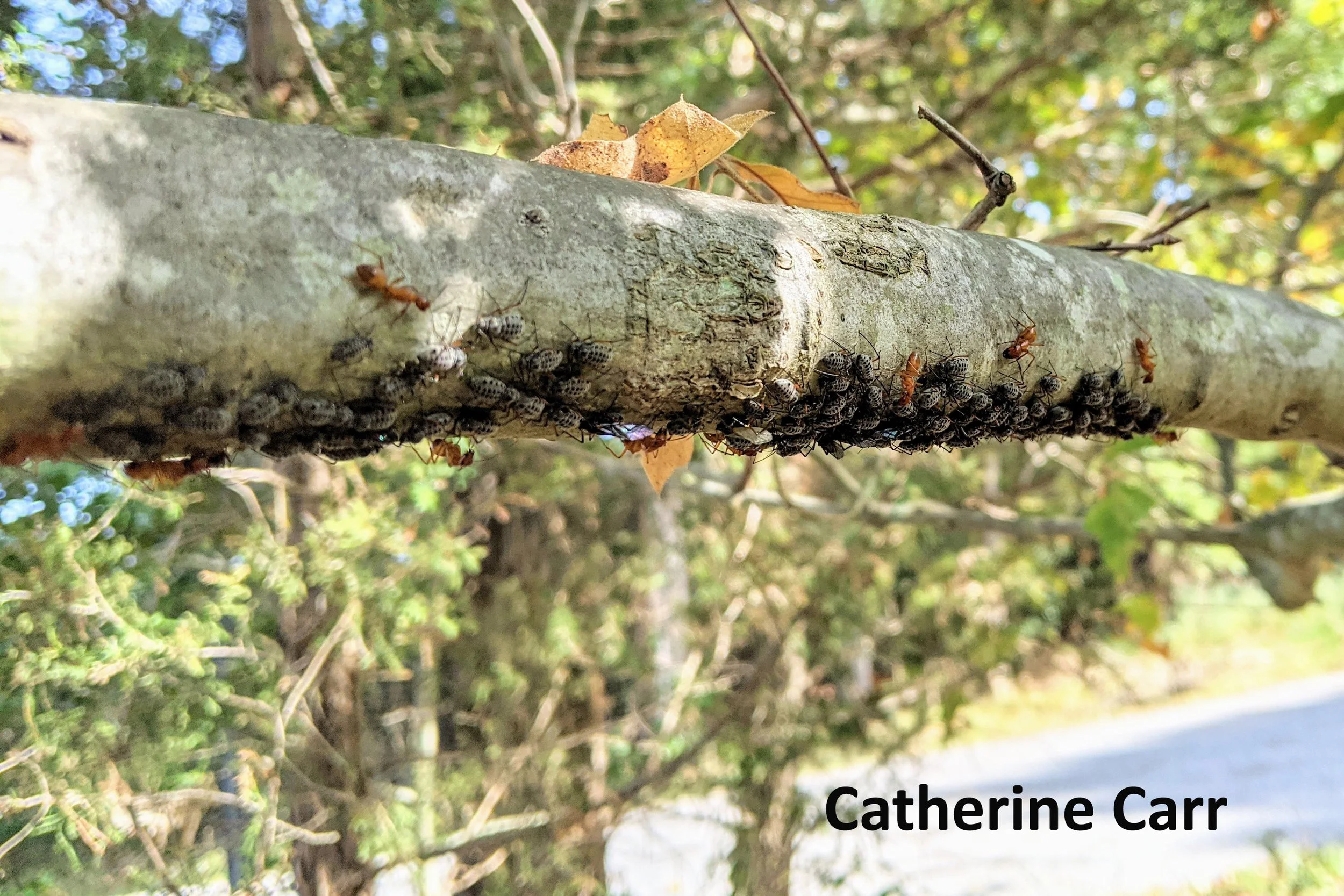
On the branch of a beautiful oak tree, giant bark aphids are tended by ants. This classic mutualism, with ants protecting aphids from predators and parasites and in return receiving honeydew from aphids, is a partnership found in several countries around the world. Image credit: Catherine Carr
In addition to oaks, giant bark aphids are found on hickory, walnut, and beech, to name a few. Several years ago, on the campus of the University of Maryland, giant bark aphids and giant willow aphids were discovered on the bark of a magnificent beech tree and a weeping willow tree on campus. Here are their stories.
Giant Bark Aphids by the Bug Guy
‘Twas the week before Christmas and what did I see,
Giant bark aphids on a leafless beech tree.
Aphids are not known for their very large size,
But these babes on beech trees win the “big-aphid” prize.
These serious sap-suckers spent several past weeks,
Sipping plant sap from branches through very long beaks.
Aphid moms suck sweet phloem by night and by day,
And turn sap into nymphs - born alive, by the way.
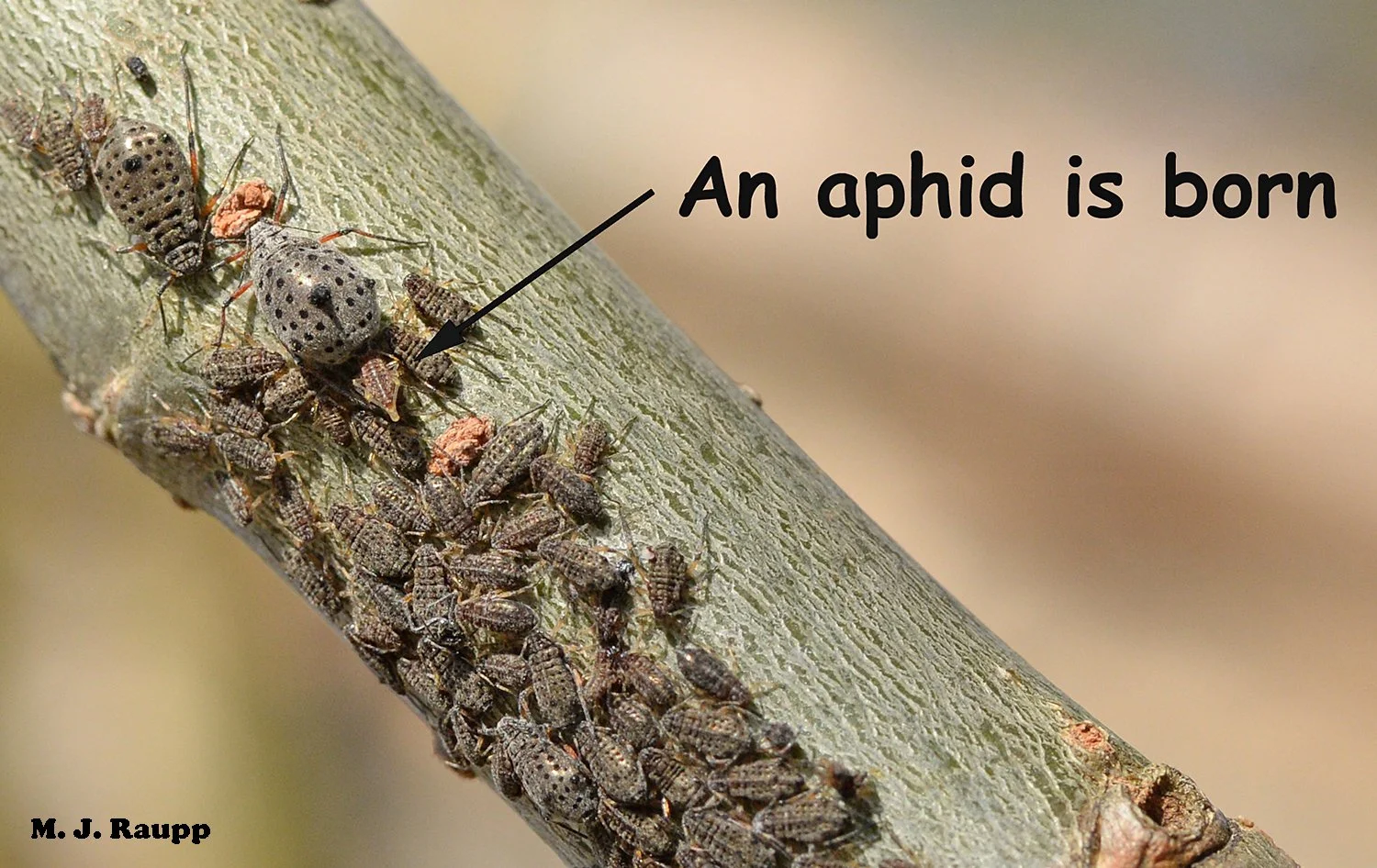
In this colony of giant willow aphids, the large female on the upper left portion of the branch is giving birth to a daughter.
These strange spawning efforts are quite something to see,
Bug geeks call this birth-trick viviparity.
In the waning of fall, cold winds start to blow,
And these gals change their plan. They just seem to know.
No more birthing youngsters on twigs in the cold,
They lay eggs on branches, many thousand all told.
Braving icy winds and the season’s first snow, giant willow aphids try to squeeze out one more generation before Old Man Winter puts them to rest.
Tiny black eggs seem to be a perfect life stage,
To brave wicked winter when vicious storms rage.
And if aphids can hope, their fondest hope must be,
That no predators find their eggs on the leafless beech tree.
Fear not giant aphids, be glad and be happy,
In spring eggs will hatch when beech trees get sappy.
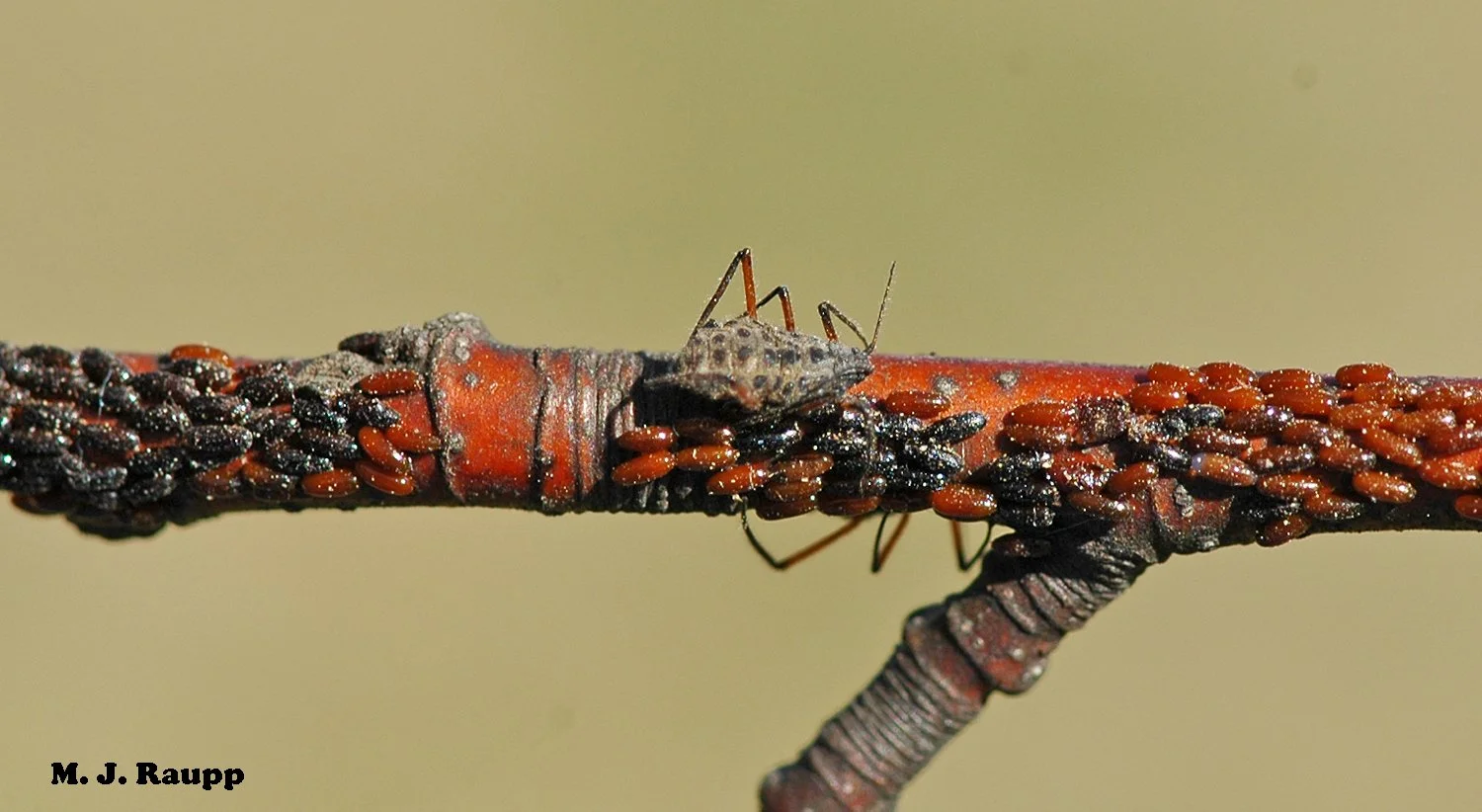
Eggs of the giant bark aphid are the overwintering stage. They line small branches by the thousands and change from amber to black as they age.
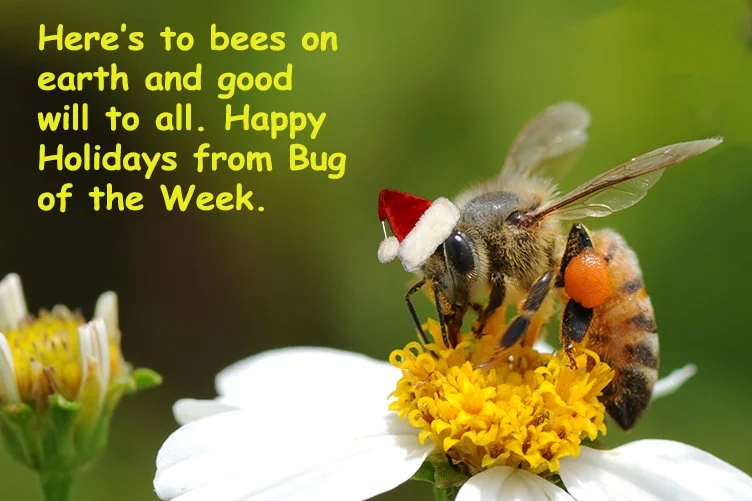
Happy Holidays from Bug of the Week!
Acknowledgements
Bug of the Week extends apologies to Clement Clark Moore. We also thank Dr. Catherine Carr for providing inspiration and an image for this episode. Like woolly alder aphids, woolly beech aphids (aka beech blight aphids), and others we met in previous episodes, these aphids reproduce parthenogenetically, that is, without males. To learn more about magnificent giant aphids on beech and willow trees, please visit the following websites:
https://content.ces.ncsu.edu/giant-bark-aphid
https://content.ces.ncsu.edu/giant-willow-aphid
To witness aphid viviparity, please click on this link: https://www.youtube.com/watch?v=Yup6spoUpv0