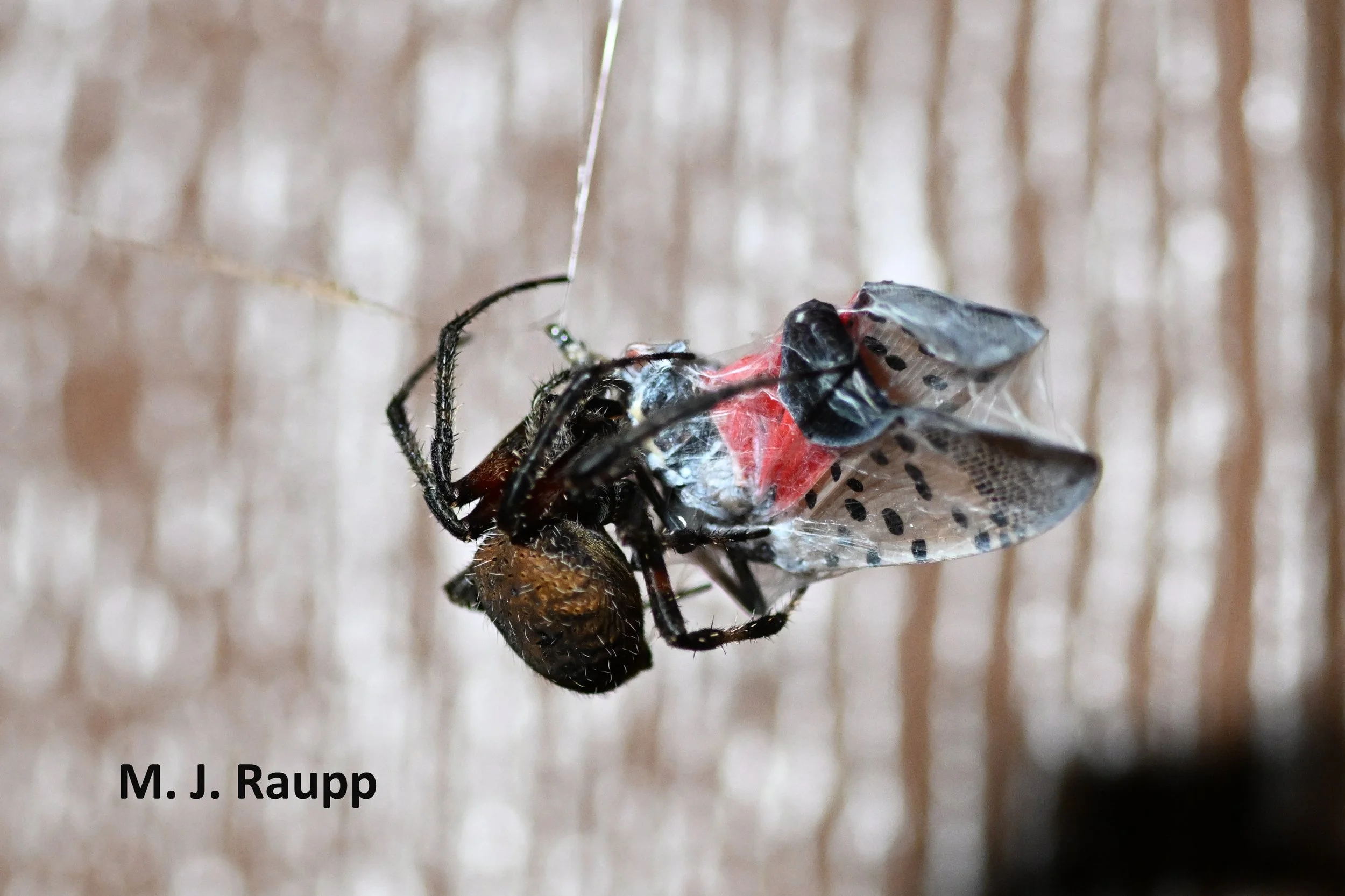
A few episodes ago we learned the fate of an unlucky spotted lanternfly that had a paralyzing encounter with a pair of scrappy house spiders. This week while putting away some tools, I noticed a very large and impressive spotted orb weaver feasting on a brown marmorated stink bug on the side of a tool shed. Marmorated stink bugs are one of those rascally invaders from Asia that was quite the stir when they first arrived in the DMV more than two decades ago. Well, as I watched the orb weaver devour the stink bug, I couldn’t help but wonder if she might enjoy another tidbit from the Far East.
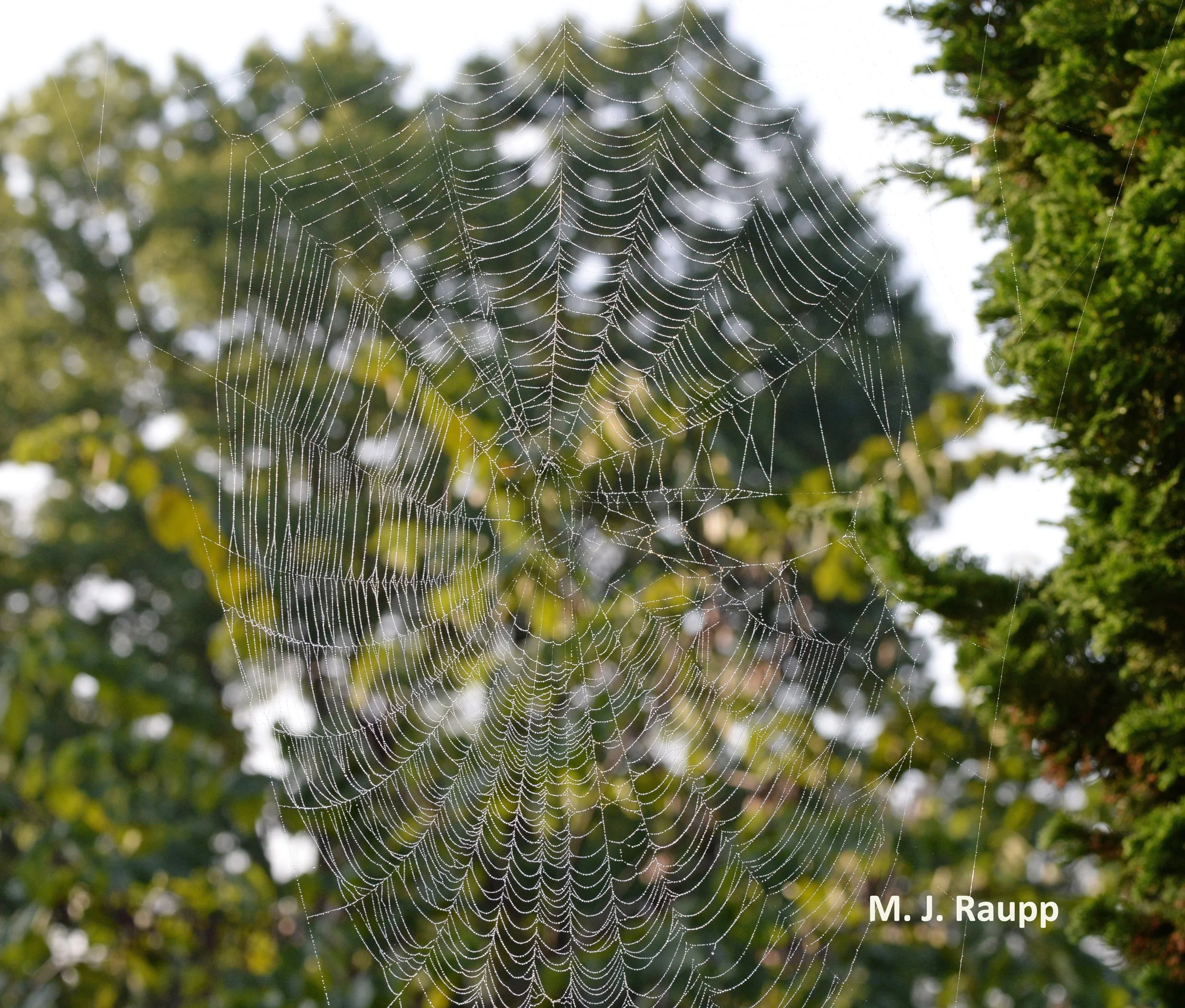
A fine morning mist reveals the beautiful web of a spotted orb weaver. Webs can be several feet at their widest dimension.
The following evening resting on the shed door not more than a meter away from the web was an adult spotted lanternfly. With just a little gentle prodding it launched itself into the orb weaver’s web. As you might have guessed, the match between the spotted lanternfly and the spotted orb weaver wasn’t much of a match at all. Within moments, the spider snared, wrapped, and paralyzed the lanternfly. Game over, but not exactly, as the spider fed on the lanternfly for several hours before abandoning its victim.
As twilight falls, a beautiful spotted orb weaver seems to float in air as she spins the delicate, nearly invisible strands of silk that form her web. Watch as she uses her hind legs to attach the sticky spiral threads to the radial lines. How cool is that?
Late summer is a time when many spiders reach maturity and maximum size, having devoured prey throughout the growing season. The web of the spotted orb weaver was no tiny affair like the webs of cellar spiders or common house spiders that we met in previous episodes. This web spanned more than three feet from one end to the other. In nature the spotted orb weaver is a denizen of woodlands, where it builds its web amongst the twigs and branches of trees and shrubs. Interesting studies of their web placement revealed that these spiders are creatures of the light. Webs are strung in relatively well lighted areas where the density of flying prey may be greater. This scenario surely fits with the location of my spider’s web, cleverly constructed in a flyway between two sheds.
On the side of my tool shed a lovely spotted orb weaver built her web. One evening I watched her devour an invader from Asia, the brown marmorated stink bug. I couldn’t help but wonder if she might enjoy another tidbit from the far east. The following evening, with a little prodding an adult spotted lanternfly hopped into the web. As you might have guessed, the match between the spotted lanternfly and the spotted orb weaver wasn’t much of a match. Within moments, the spider snared, wrapped, and paralyzed the lanternfly with venom. With her victim subdued, she embraced the lanternfly and began to feed. Game over, spider 1 - lanternfly 0.
During the daytime, the orb weaver hides in a small silken refuge beneath the roof of the shed. At dusk, I watched her spin a new web, and by nightfall she had snared a stink bug. Once a hapless victim was entangled, she secured it with sheets of silk from spinnerets on her rear end and delivered venomous bites with her fangs. Powerful fangs are used to pulverize the stink bug, and proteinaceous fluids and morsels are turned into spider eggs. In the current battle against spotted lanternflies, clever studies by scientists at Penn State have found spiders to be the invertebrate most often observed attacking lanternflies. With luck and abundant lanternflies, my spider may produce a marble sized egg sack with as many as 1000 eggs before chilly weather brings an end to her beneficial escapade. Nice work spiders.
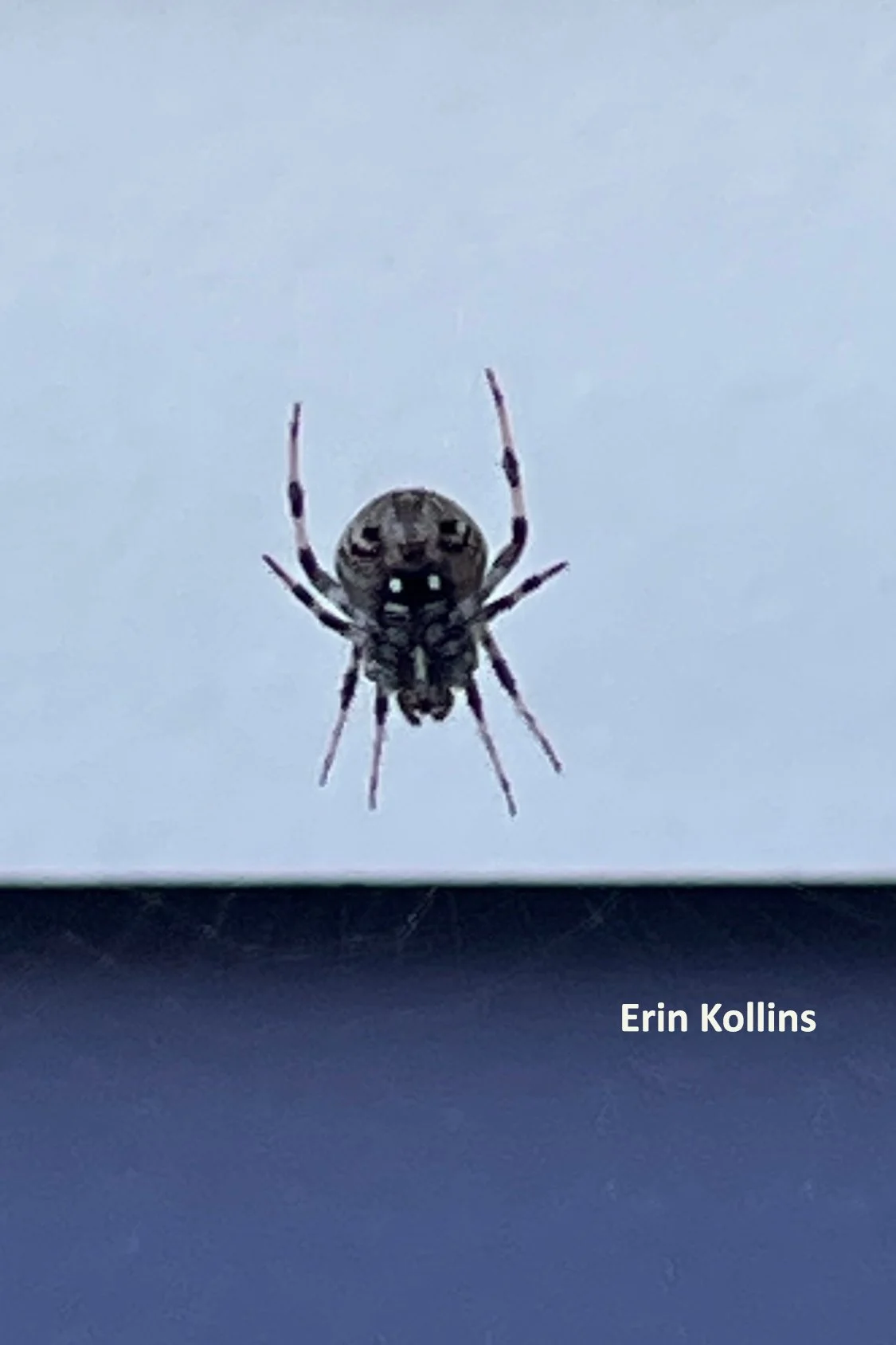
The underside of the spotted orb weaver may provide a clue as to how it got its name. Image credit: Erin Kollins
References
The wonderful website “Neoscona crucifera (Spotted Orbweaver)” at www.spiders.us, “Using community science to identify predators of spotted lanternfly, Lycorma delicatula (Hemiptera: Fulgoridae), in North America” by Anne E. Johnson, Alison Cornell, Sara Hermann, Fang Zhu and Kelli Hoover, and the article “Choosing Hunting Sites: Web Site Preferences of the Orb Weaver Spider, Neoscona crucifera, Relative to Light Cues” by M. R. Adams were used as references for this episode. We thank Erin Kollins for the image of the underside of the spotted orb weaver. The inspiration for this episode came from several Maryland Master Naturalists enamored with large spiders they had recently observed.