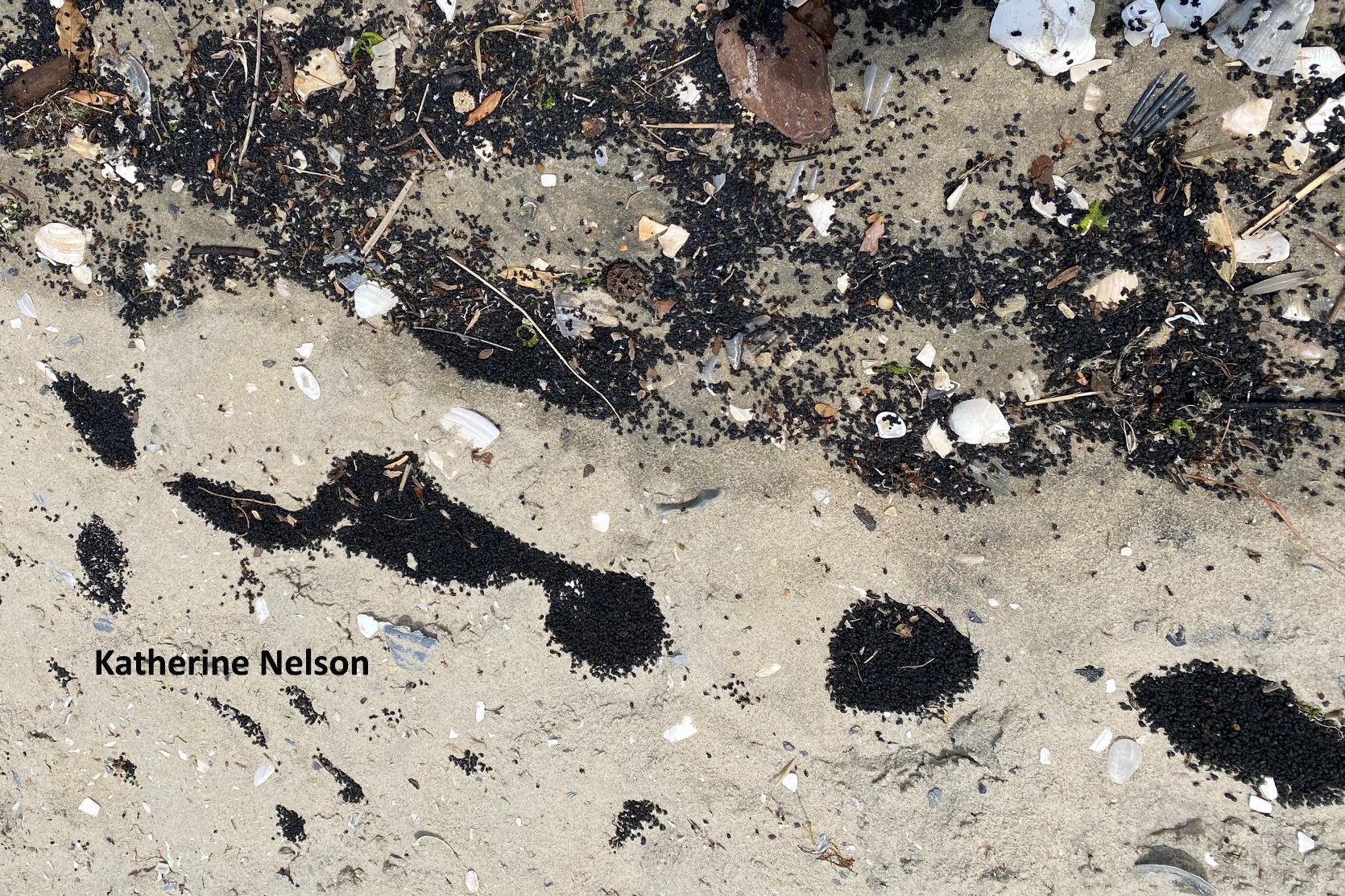
Every now and then, for reasons known or unknown, some of our native insects go wild and reach astounding numbers, creating some concerns and damage. Earlier this year we met an outbreak of native caterpillars defoliating hundreds of acres of native hardwood trees in Western Maryland. In June of 2021, you may recall a report of thousands of periodical cicadas that appeared on the beaches of the Chesapeake Bay. Well, earlier this month an avid beach comber reported “billions” of robust tiny beetles lining the western shore of the Chesapeake for more than a mile near Calvert Cliffs, MD. Some were dead but many were alive, clinging to beach wrack and each other along the shoreline. These waterlogged insects were Yellow Poplar Weevils (YPW), a native insect that reached outbreak levels in 2025 in nurseries and landscapes here in the DMV. To learn a bit more about this strange event, we spoke to Professor Paula Shrewsbury of the University of Maryland, an expert in the management of pests of ornamental plants. Her comments are excerpts from weekly reports prepared for the Green Industries of the Mid-Atlantic region in 2025 and 2026.
“These types of “wash ups” are often related to winds and water currents, and the weevil’s (YPW) ability to float. Environmental conditions came together this week that resulted in so many weevils on the shoreline. In looking into this, there have been other reports of similar wash up phenomena of YPW in MD and VA over the years.”
Piles of small black beetles are composed of thousands of Yellow Poplar Weevils that washed up on the shores of Chesapeake Bay in June. Tiny jaws on the snout of the beetle damage leaves on several kinds of ornamental plants. Watch as one of these tiny terrors moves along stems and leaves of a yellow poplar, a.k.a. tulip tree, and a closeup of the small beetle on a magnolia leaf. Recently, it has been raising havoc in commercial nurseries and landscapes in the DMV. Images by Katherine Nelson, Michael Raupp, and Paula Shrewsbury, video by Marie Rojas and Michael Raupp.
“Monday, June 9th, [2025] I was contacted by two nurseries in Frederick County, MD describing extremely high numbers of native yellow poplar weevil (YPW) adults, Odontopus calceatus (Coleoptera: Curculionidae), on magnolias and they were causing significant damage to the newer foliage. This is a new pest to me and as I searched for information, I found reports of YPW in recent days from VA, DC, and OH. This weevil is known to sporadically outbreak. In an article from Penn State Extension on YPW published in 2015, they reported extremely high densities of YPW in PA and the mid-Atlantic and stated that the level of outbreak then had not been seen since 1968.
Host plants of YPW include magnolias, sassafras, tulip tree (yellow poplar) and sweet bay. YPW’s life cycle consists of one generation per year and YPW activity is reported to occur from mid-late May through mid-July. YPW overwinter as adult weevils in the leaf litter under their host plants. In the spring / early summer as the weather warms, adult weevils emerge and feed on the buds and newer foliage of their hosts with their chewing mouthparts, mate, and lay eggs in the mid-vein on the lower leaf surface. Newly hatched larvae chew into the leaf tissue and feed as leaf miners. Multiple leaf miners can be found in a single leaf. Larvae pupate within the leaf mine.
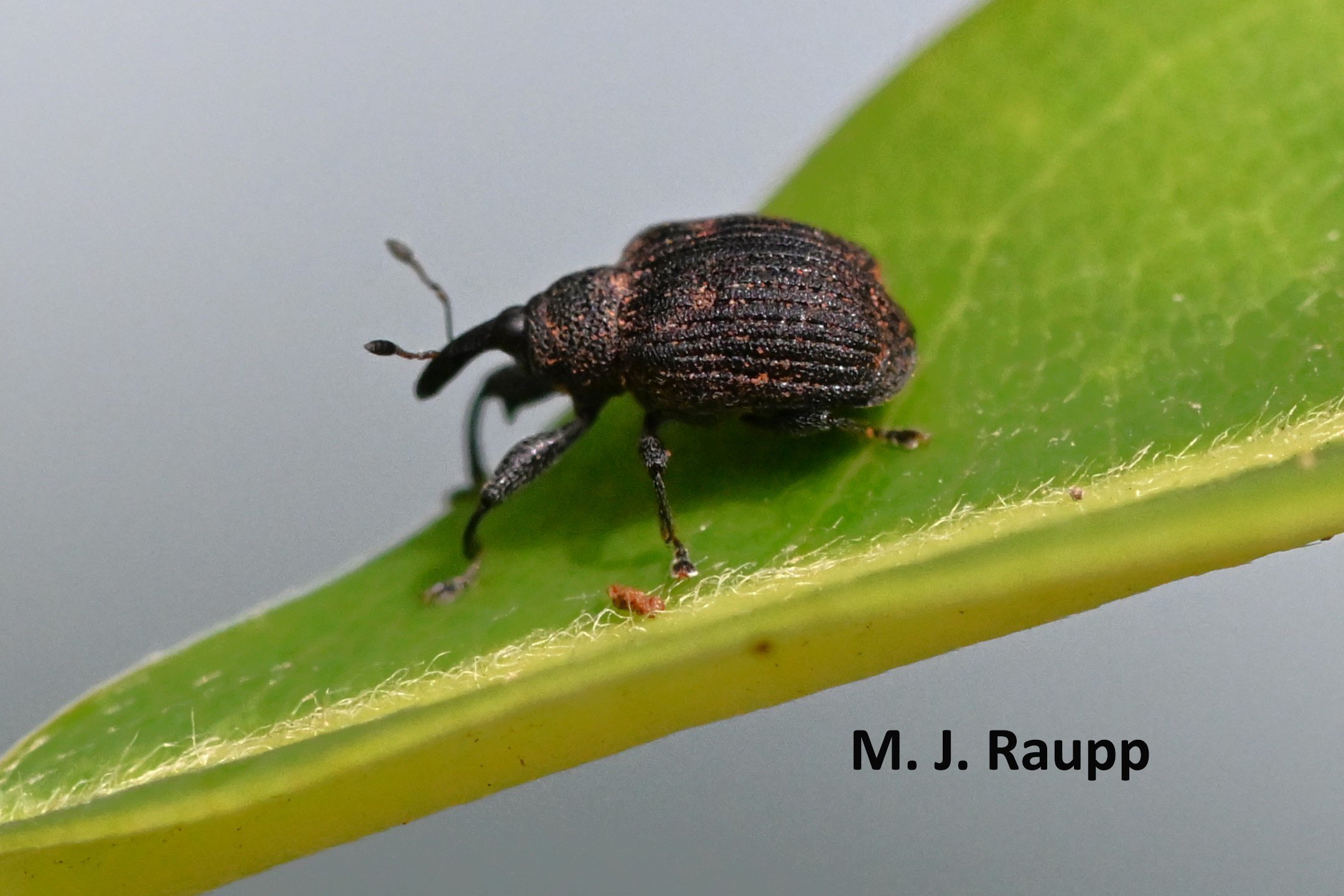
At the tip of the elongated snout, tiny mandibles of the Yellow Poplar Weevil chew holes in leaves and damage many types of plants.
Adults emerge and use their chewing mouthparts on the end of their long “snout” to feed on leaves (usually newer, tender leaf tissue), stems, and flowers resulting in crescent-shaped (more or less) brown etching in the tissue. Feeding results in leaf curling and distortion, and premature leaf drop. YPW are reported to cause the most damage during this time. Around mid-July or so YPW adults enter a period of aestivation (summer inactivity) and enter the leaf litter, where they overwinter. Areas that are under drought conditions seem to suffer from YPW more.
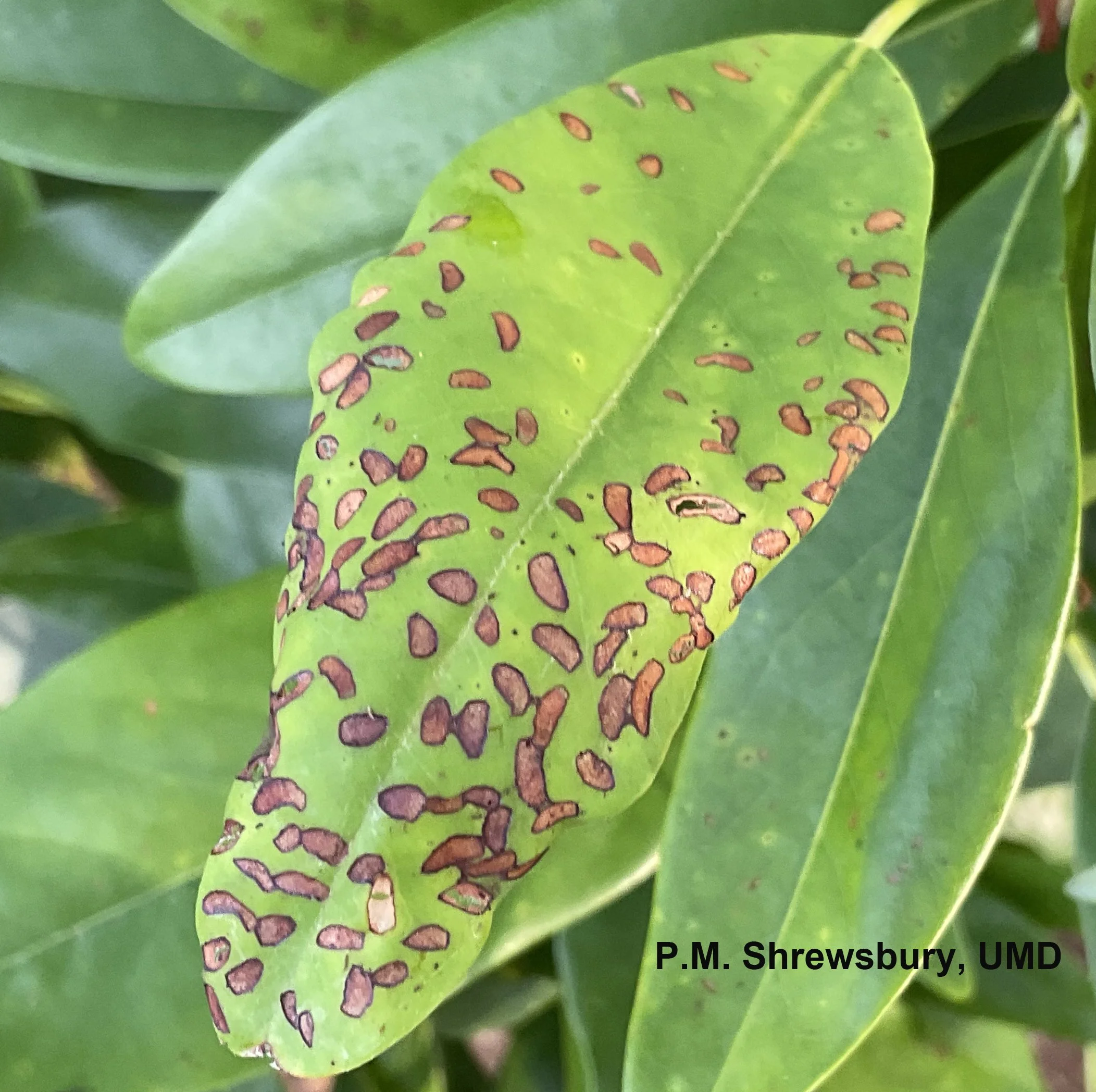
Feeding by Yellow Popular Weevil results in ugly lesions on plant leaves. Image: Paula Shrewsbury, PhD
What else do we know? As of now, I have only seen and had reports of adult weevils being active and causing damage, and only on Magnolia in two nurseries. There are high populations of adults, and they are causing lots of damage, and the damage happens quickly. Monitor hosts of YPW now! Magnolia species / cultivars appear to vary in the amount of YPW adult activity and damage they are receiving. It appears that varieties that still have tender newer foliage are getting hit worse than those with foliage more hardened off. Weevil adults are being seen on non-plant structures (ex. plant poles / signs) and other plants (ex. dogwoods near the magnolias – but I did not see damage on the dogwoods as of Monday).”
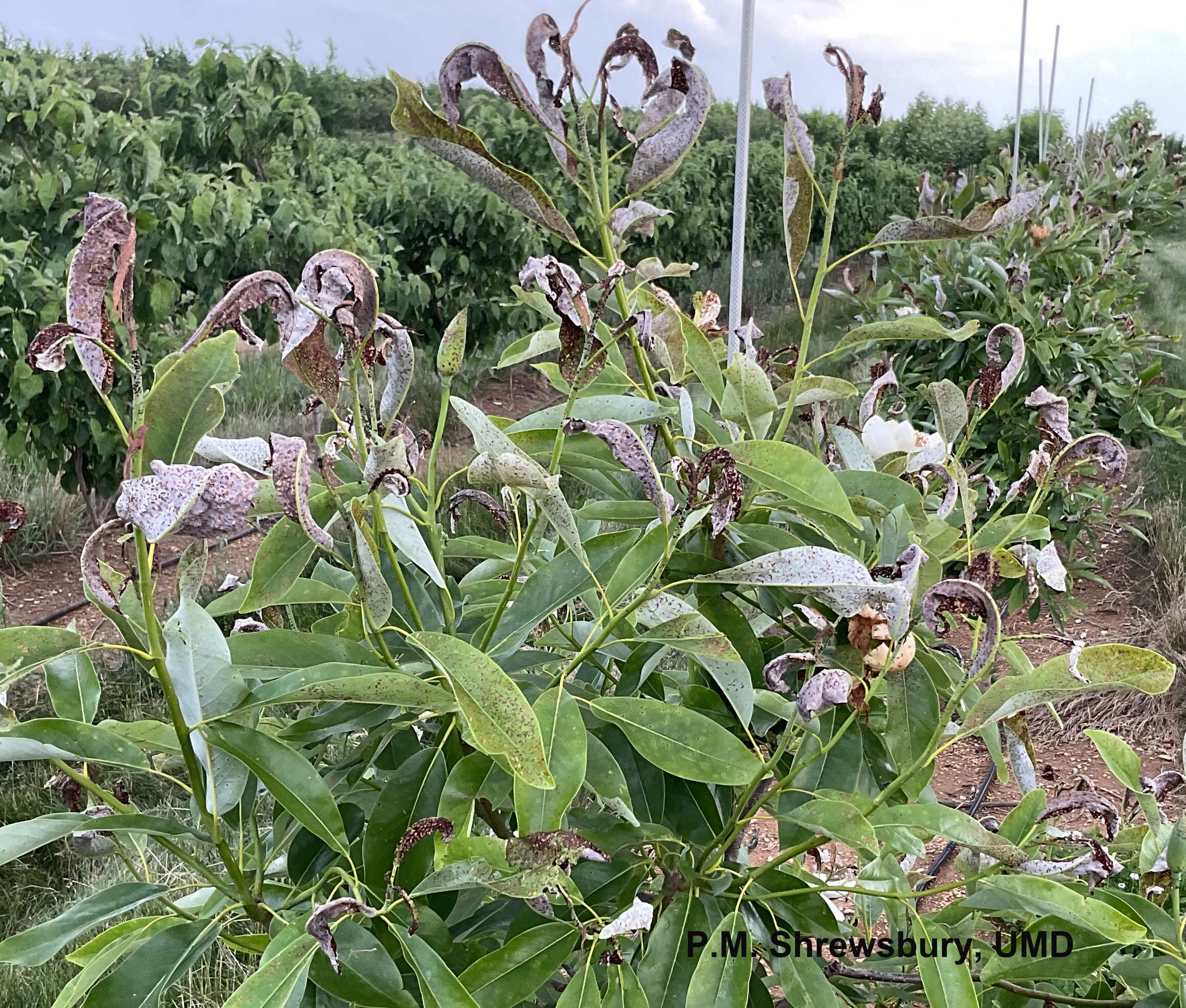
Weevils ravaged plants in nurseries and landscapes this year. Image: Paula Shrewsbury, PhD
Scientists report that following years of outbreaks, YPW populations decline dramatically. Upticks of predators and several species of parasitic wasps and late spring frosts are implicated in these population collapses.
Of the many comments that have appeared in response to the appearance of YPW, people have wondered if YPW is “the lesser of two weevils” and noted that these weevils are now “all washed up.”
Acknowledgements
Sincere thanks to Dr. Shrewsbury for allowing us to reprint information from her reports and for sharing images of the YPW. Thanks also to Marie Rojas for contributing her images and videos of the weevil. Thanks to Katherine Nelson for providing the inspiration for this episode and sharing wonderful images of waterlogged weevils she spotted on the shores of the Chesapeake.
For more information about the Yellow Poplar Weevil life cycle, ecology, damage, and management, please click the following links:
https://bygl.osu.edu/node/2486
https://content.ces.ncsu.edu/yellow-poplar-weevil
https://www.fs.usda.gov/foresthealth/docs/fidls/FIDL-125-YellowPoplarWeevil.pdf